Graduate unemployment in Nigeria has become one of those subjects every family whispers about at some point: the cousin with a first-class degree still job hunting two years on, the neighbour’s daughter running a small business because nothing else came through. It is not that these graduates lack ambition or intelligence. It is that the journey from convocation gown to confirmed job offer has grown longer, more competitive and, for a genuinely large number of people, stalled entirely.
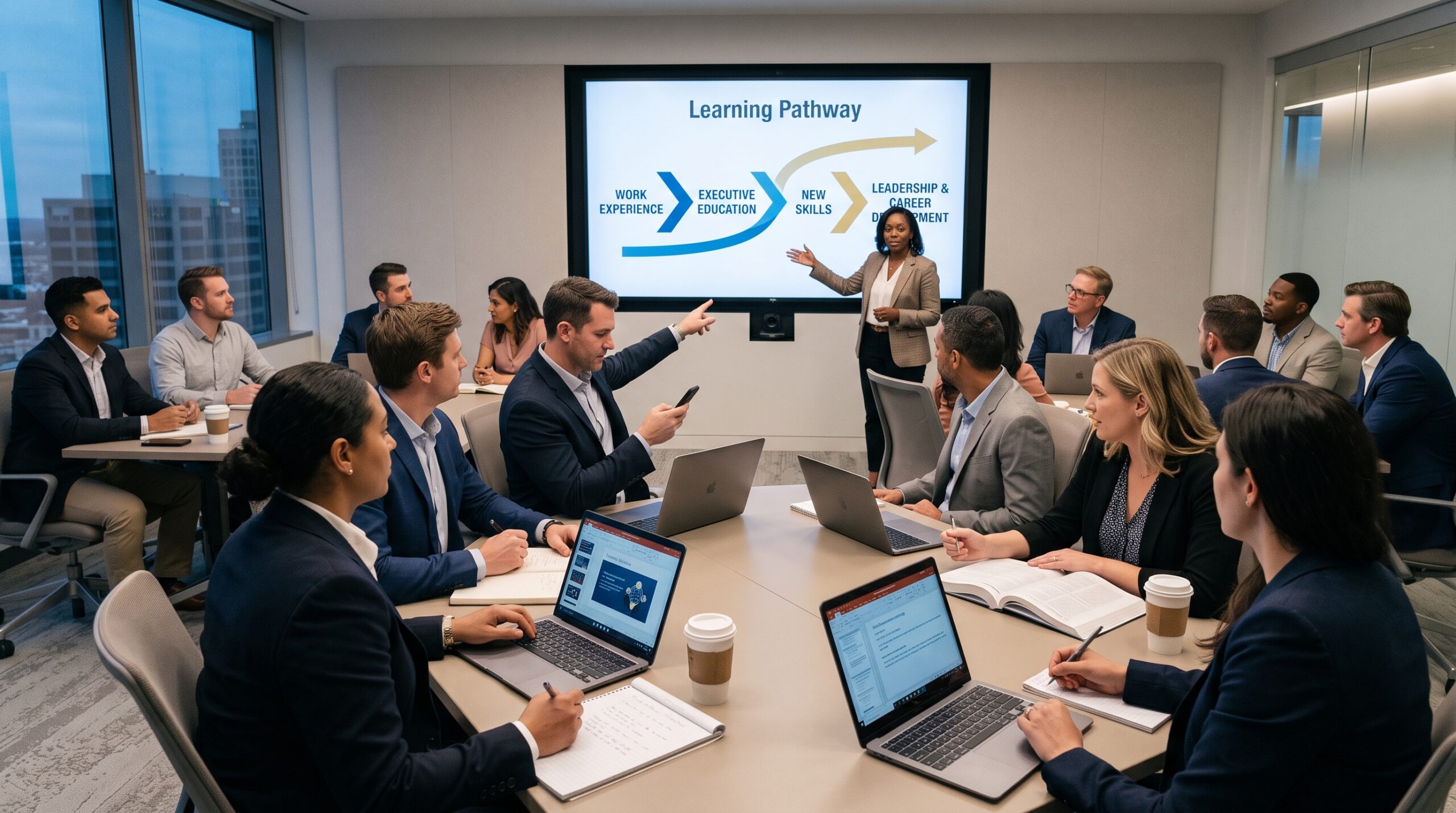
None of this means university education has stopped mattering. A degree still opens doors that would otherwise stay shut, particularly in regulated professions like law, medicine and engineering. What has changed is that employers now look past the certificate to ask a harder question: can this person actually do the job from day one? This article unpacks why graduate unemployment in Nigeria persists, what employers are really assessing when they say a candidate “isn’t quite ready,” and how students, recent graduates and working professionals can build the practical readiness that today’s labour market genuinely demands.
Read More: Why Your Degree Doesn’t Matter as Much as Your Skills (And How to Get Both)
What Is Graduate Unemployment in Nigeria, Really?
Graduate unemployment in Nigeria is often reduced to a single headline percentage, but the picture is more layered than that. According to the National Bureau of Statistics’ Nigeria Labour Force Survey, the unemployment rate among people with post-secondary education stood at 9.0% in Q1 2024, against just 2.0% for those with post-graduate qualifications. That gap between first-degree holders and postgraduates is itself telling: it suggests that further specialisation measurably improves a person’s chances, which is precisely the argument for treating a first degree as a starting point rather than a finished product.
There is also a distinction worth holding onto: unemployment, underemployment and skills mismatch are not the same thing. A graduate driving for a ride-hailing app or working a retail till is not “unemployed” in the strict statistical sense, yet the role has little to do with their accounting or engineering degree, and the wages rarely reflect four years of study. This is underemployment, and it hides inside official figures more often than most people realise. Meanwhile, the pipeline keeps widening. Nigerian universities are estimated to produce roughly 200,000 graduates every year, entering a labour market that simply cannot absorb them at the same pace, particularly in formal, salaried employment. Understood this way, graduate unemployment in Nigeria is less a single crisis than three overlapping ones: too few jobs, too many mismatched skills, and too little visibility into what employers actually test for.
Why Graduates Struggle to Find Jobs
Ask any hiring manager why graduates can’t find jobs, and you rarely get one tidy answer. It is usually a combination of factors reinforcing one another:
- Skills mismatch: what universities teach and what employers need have drifted apart, especially in fast-moving fields like technology, data and digital marketing.
- Limited work experience: entry-level roles increasingly ask for one to two years of experience, a frustrating catch-22 for first-time job seekers.
- Employer expectations: many employers screen for communication, problem-solving and digital fluency before they even assess technical knowledge.
- Intense competition: with roughly 200,000 new graduates a year chasing a shrinking pool of formal jobs, even qualified candidates get lost in the volume of applications.
- Thin professional networks: without internships, mentors or alumni connections, graduates miss the quiet referrals that fill many vacancies before they are ever advertised.
- Little career preparation: interview technique, CV writing and personal branding are rarely taught as part of a degree programme.
Underlying all of this is a structural gap. A Businessday investigation cites a Jobberman Foundation finding that six out of ten Nigerian graduates lack the skills employers are looking for, even as businesses simultaneously struggle to fill open roles with qualified candidates. The same report notes that the World Bank estimated 23 million Nigerians were unemployed or underemployed in 2023, many of them young people. That mismatch, more than any single cause, explains why the unemployment rate among Nigerian graduates remains stubborn even as the wider economy adds jobs.
Read More: Highest Paying Jobs in Nigeria: Top Careers and the Degrees That Can Get You There
Is a University Degree Still Worth It?

Yes, but with an important caveat. A degree still provides academic grounding, professional eligibility for regulated careers, and access to postgraduate study and international opportunities that remain closed without one. Employers in banking, healthcare, engineering, law and the civil service still treat a degree as a baseline requirement, not an optional extra.
What a degree no longer guarantees, on its own, is graduate employability. Analysis published in The Guardian notes that fewer than 20% of graduates are considered immediately employable, largely because of a persistent disconnect between what curricula cover and what the workplace actually demands. The same piece cites a Stutern survey in which only around one in ten employers described graduates as skilled without further training. So the honest answer here is not “skip university.” It is “treat the degree as a foundation, then build on it deliberately.”
The Skills Gap: What Employers Look for Beyond a Degree

The skills gap in Nigeria is rarely about one single missing subject. It shows up as a pattern of employability skills that graduates are expected to already have but were never formally taught. A few examples, tied to real career paths rather than a generic list:
- Digital literacy: a marketing graduate who cannot navigate spreadsheets, analytics dashboards or basic design tools will struggle in almost any brand role today.
- Data skills: even outside tech, roles in finance, operations and public health increasingly expect comfort with data interpretation.
- Communication and collaboration: employers consistently rank this above raw technical polish, since most work happens in teams and client conversations.
- Problem-solving and adaptability: businesses want graduates who can think through an unfamiliar situation, not just recall lecture notes.
- Project management: even junior staff are expected to manage timelines, deliverables and stakeholders almost from their first week.
The scale of the digital dimension of this skills gap is significant. A report cited by MyJobMag from the National Information Technology Development Agency found that 85% of Nigerian graduates lack basic digital competencies needed for today’s corporate environments. That statistic explains a great deal about why job-ready skills, rather than grades alone, now decide who gets hired, and why deliberate skills development in Nigeria has become just as important to a career as the degree itself.
Certifications and Practical Experience: Proving What You Can Do

Professional certifications matter because they demonstrate something a transcript cannot: current, applied, industry-recognised knowledge. A certification signals that a graduate has kept learning after school, understands a specific domain in depth, and has validated that understanding against an external standard rather than a single lecturer’s marking scheme. For career switchers and working professionals, certifications also offer a far faster route into a new field than starting a second degree from scratch. Platforms such as EduTech Business’s course marketplace and partner institutions like the Metropolitan School of Business and Management give Nigerian learners access to internationally recognised programmes without needing to relocate or pause a career.
Certifications work best alongside practical experience, though, not instead of it. Internships, freelance projects, volunteering, apprenticeships and small, self-directed personal projects all build a portfolio that shows, rather than tells, what a graduate can actually do. A single well-documented project, built and shared publicly, often carries more weight in an interview than another line on a CV.
Building Career Readiness, Whether You’re Still Studying or Already Working
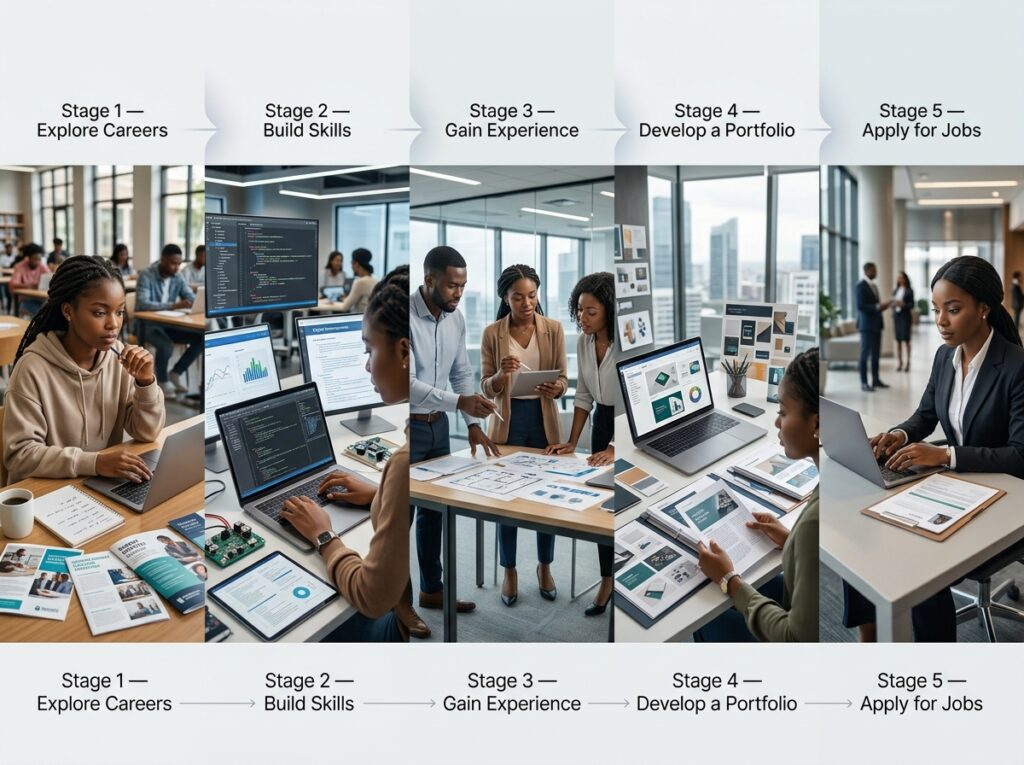
For students, career readiness is best built gradually rather than crammed into a final semester of panic. A rough guide, adjustable for shorter or longer degree programmes:
- Early years: explore career paths, join relevant clubs or societies, and follow industry conversations to understand where the opportunities actually are.
- Middle years: build core and digital skills deliberately, treating employability skills as coursework rather than an afterthought.
- Penultimate year: pursue internships, industry projects or structured volunteering to gain real, referenceable experience.
- Final year: assemble a portfolio, complete a relevant certification, and begin networking with clear intent.
- Before graduation: apply widely, request interview practice from mentors, and refine a CV around demonstrable outcomes.
Read More: The Qualification Paradox: Why the Most Overqualified People Are Also the Most Stuck
Working professionals face a different but related challenge: closing a skills gap without pausing an income. Short professional programmes, online learning and industry-recognised technical training make reskilling and upskilling realistic alongside a job, whether the goal is a promotion, a lateral move, or a full career switch into a growing sector like data or digital marketing. This kind of ongoing skills development in Nigeria’s job market is no longer optional for professionals who want to stay competitive.
Choosing the Right Path, and How EduTech Business Fits In
There is no single correct route between a university degree, a professional certification, a short course, technical training and hands-on experience. The right combination depends on a person’s career goal, existing qualifications, budget and timeline. Someone targeting a regulated profession still needs the degree. Someone pivoting into a digital career may get there faster through a focused certification and a strong portfolio.
This is where a platform like EduTech Business earns its place in the conversation. It connects learners with university programmes, professional certifications, and skills training designed around actual career outcomes rather than credentials for their own sake, with flexible study options for people juggling work, family and study at once. For a closer look at how the two paths compare, EduTech Business has also published a dedicated guide on professional certification versus a degree.
Graduate unemployment in Nigeria will not be solved by any single graduate acting alone, but individual choices still matter enormously within a difficult market. A degree remains a genuine asset, not a wasted investment. The graduates who move fastest from convocation to career are the ones who treat their qualification as a starting point: adding certifications, seeking practical experience, sharpening digital and communication skills, and preparing deliberately for interviews rather than hoping a CV speaks for itself. That combination, more than luck or connections alone, is what closes the gap between holding a degree and being genuinely job-ready, and it is the clearest, most controllable route through Nigeria’s graduate employability challenge.
Read More: Professional Certifications That Actually Pay Off: A 2026 Career Guide
Frequently Asked Questions
Why is graduate unemployment high in Nigeria? It stems from a combination of factors: a fast-growing number of graduates entering a labour market that cannot absorb them at the same pace, a mismatch between what universities teach and what employers need, and limited access to internships or work experience before graduation.
Why can’t graduates find jobs? Employers increasingly hire for demonstrated skills and experience, not qualifications alone. Graduates without internships, certifications or a portfolio often struggle to stand out, even with strong academic results.
Is a university degree enough to get a job? Not on its own for most roles outside regulated professions. A degree provides the foundation, but employers also expect digital literacy, communication skills and some form of practical experience.
What skills do Nigerian employers want? Digital literacy, communication, problem-solving, data skills and adaptability consistently rank highest, alongside role-specific technical knowledge.
Can professional certifications improve employability? Yes. Certifications validate current, applied knowledge in a specific area and show employers that a candidate has kept learning beyond their degree.
How can graduates gain work experience? Through internships, freelance work, volunteering, apprenticeships and self-directed projects that can be documented and shared as a portfolio.
What should I learn after university? Prioritise digital skills relevant to your field, one recognised certification in your area of interest, and soft skills like communication and project management.
How can I become more employable in Nigeria? Combine your degree with practical experience, at least one relevant certification, a documented portfolio, and deliberate preparation for interviews and networking.