The professional certification market has never been noisier. Scroll through any career forum or LinkedIn feed and you will find someone urging you to get certified in something, whether cloud computing, project management, digital marketing, or the latest AI framework. The challenge is not finding a certification; it is knowing which ones are professional certifications worth it for your goals, and which are little more than expensive badges that impress nobody in a hiring room.
The stakes are real. According to research from Indeed’s Hiring Lab, the share of US job postings requiring at least a college degree fell from 20.4% to 17.8% between 2019 and 2024, and formal education requirements have dropped in 87% of occupational sectors. That is not a small statistical blip; it is a structural shift in how employers evaluate talent. At the same time, TestGorilla’s 2025 research shows that 85% of employers now use skills-based hiring, up from 73% in 2023. Employers are increasingly asking: what can you do? The right certification is one direct, credible answer. This guide helps you identify which ones are worth your time and money in 2026.
Read More: Online Degree vs. Professional Certificate: What’s Better for Your Career
Why Professional Certifications Worth It Are Growing Faster Than Degrees
The shift is partly economic and partly practical. A degree takes three to four years and costs tens of thousands in tuition, living expenses, and lost income. A well-chosen certification can be completed in weeks to six months, at a fraction of the cost, and can often be studied around an existing job. For employers, a certification from a recognised body (AWS, PMI, CompTIA, Google) signals validated, current expertise in a specific skill rather than general academic competence from years ago.
The numbers back this up. According to Skillsoft’s IT Skills and Salary Survey, IT professionals holding a top-tier certification earn an average of $138,800 per year, roughly 25% higher than uncertified peers. In project management, PMI’s most recent salary data shows PMP-certified professionals earn a median 33% more than non-certified counterparts across 21 countries. The economy is not rewarding paper for its own sake; it is rewarding demonstrable, current, job-ready skill. Certifications, when chosen wisely, are the most efficient way to signal exactly that.
Certifications That Are Actually in Demand (By Category)
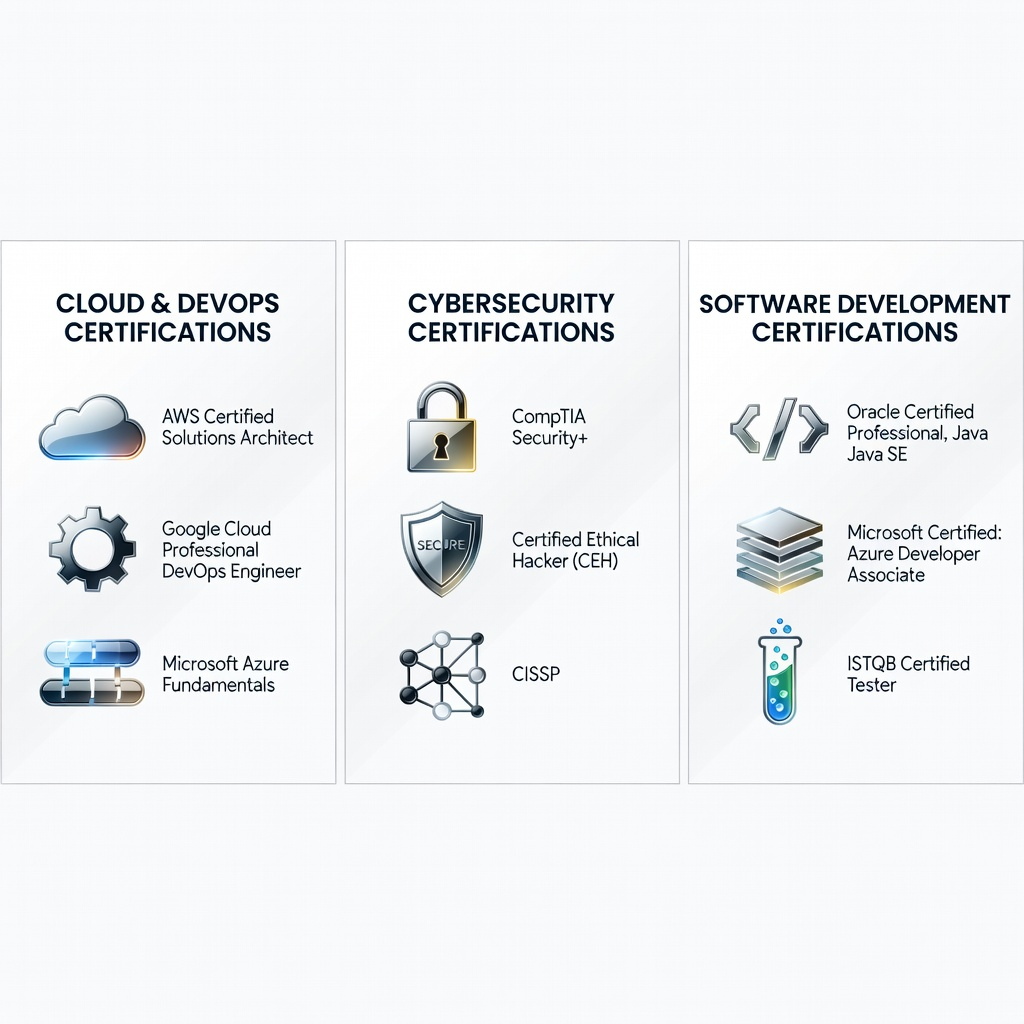
Tech Certifications
Tech certifications dominate the high-ROI list in 2026, particularly in cloud computing, cybersecurity, and data analytics.
Cloud Computing:AWS Certified Solutions Architect is consistently among the highest-earning credentials globally. Robert Half’s 2026 Technology Salary Guide confirms cloud certifications command the highest salary premiums in tech, with AWS-certified professionals earning between $120,000 and $180,000 annually. The AWS Cloud Practitioner exam costs $100 and serves as the natural entry point; the Solutions Architect Associate follows. Duration: 1 to 3 months of study depending on prior experience.
Cybersecurity:
The CISSP (Certified Information Systems Security Professional) is the gold standard for experienced security professionals, with average salaries of $130,000 to $165,000. For career changers entering the field, CompTIA Security+ is the recommended starting point: it costs under $400, takes two to four months to prepare, and is required for many government and defence contractor positions under DoD 8570 compliance.
Data Analytics:Google’s Data Analytics Professional Certificate on Coursera requires no prior experience, takes roughly six months, and has launched thousands of careers in business intelligence and data roles. Microsoft’s Power BI certification follows a similar trajectory for those working in enterprise environments.
Business Certifications
Project Management (PMP):The PMP remains one of the clearest examples of professional certifications worth it. PMI’s data shows that PMP-certified professionals can expect to earn over $250,000 more over a ten-year period than non-certified peers. In Africa and the Middle East, where infrastructure development is accelerating, PMP holders see salary premiums of 22% or more. The exam costs approximately $405 for PMI members and requires documented project leadership experience, which makes it credible rather than easily gamed.
Digital Marketing:Google Digital Marketing and HubSpot’s suite of marketing certifications are widely recognised, largely free or low-cost, and increasingly expected by marketing employers. For structured, supported training, platforms like edX offer university-backed digital marketing programmes with professional certificates.
Finance:
The CFA (Chartered Financial Analyst) and ACCA (Association of Chartered Certified Accountants) remain the benchmarks for finance professionals. Both require sustained study commitment (typically 18 to 36 months across levels), but both also command premium salaries and are recognised by employers across Nigeria, the UK, and internationally.
Leadership and Operations
Certifications such as the Certified Scrum Master (CSM) and ITIL (IT Infrastructure Library) serve professionals in management and operations. A CSM can typically be completed in two to four weeks following a two-day course, making it one of the fastest-ROI credentials in the business category. ITIL is increasingly expected for IT service management roles.
Read More: How to Build a Strong Student Portfolio Before University
What Makes Professional Certifications Worth It
Not every certification delivers equal value. Four factors determine whether a credential is actually worth your investment.
- Industry recognition: Is the certifying body (AWS, PMI, CompTIA, Google, ACCA) respected by employers in your target sector? An obscure issuing body significantly reduces the signal value.
- Employer demand: Check active job postings in your field and location. If the certification appears consistently in requirements or “nice to have” sections, it has real market pull.
- Practical applicability: Certifications that require you to apply knowledge through projects, case studies, or real-world assessments (rather than multiple-choice exams alone) are more credible to employers and more useful to you.
- Recertification requirements: Credentials that require continuing education to maintain, such as CISSP, PMP, and CISM, carry more weight precisely because they signal current, not outdated, expertise.
Free vs Paid Certifications: Choosing What Fits Your Situation

Free certifications from platforms like Coursera (audit mode), Google, and HubSpot are excellent for building foundational knowledge and testing whether a field genuinely interests you before committing more resources. They work well for digital marketing, introductory data analytics, and basic cloud concepts.
Paid, structured programmes are worth the investment when you need accountability, mentoring, career support, or employer-facing credibility that free platforms do not always provide. A paid programme from a recognised institution typically offers cohort learning, instructor feedback, and a certificate that carries the institution’s reputational weight alongside your name.
The pragmatic approach: use free resources to explore and build foundational knowledge, then invest in a paid, structured programme when you are ready to commit to a career transition or salary negotiation. Do not spend money on a certification in a field you have not yet tested your interest in.
Common Mistakes to Avoid
Chasing the most talked-about certification without checking whether employers in your specific sector and geography actually value it is the most expensive mistake in the certification world.
- Choosing based on trend, not fit: AI certifications are exciting, but if you have no background in programming or data, an AI credential will impress nobody in a technical interview.
- Ignoring career alignment: A cybersecurity certification is worth very little if you are targeting marketing roles. Every certification choice must begin with a clear career destination.
- Not verifying the issuing body: A certificate from an unrecognised provider may be worth less than the PDF it is printed on. Always check whether the issuing organisation is referenced in actual job postings.
- Stopping after the certificate: The credential opens a door; what you do with the skills determines whether you walk through it. Build a portfolio, contribute to projects, and demonstrate the knowledge in practice.
Programmes Worth Considering
Ingryd Academy offers structured, practical training in software development and related technical skills, designed specifically for the African market and aligned with employer expectations. For career switchers looking to enter the tech sector with job-ready competencies rather than theoretical knowledge, this kind of cohort-based programme bridges the gap that self-study often leaves open.
I-Con Business School (Iconic Open University) provides NUC-approved business and management programmes for professionals seeking structured, accredited learning in leadership, operations, and business administration. For those who need both a credential and a qualification that carries institutional weight, I-Con’s model combines flexibility with recognised certification.
Both institutions are partner programmes accessible through EduTech Business, which can help you evaluate whether either is the right fit for your goals.
How EduTech Business Helps You Choose the Right Path

The most common reason professionals choose the wrong certification is not lack of information; it is lack of context. Knowing that AWS certifications pay well is different from knowing whether AWS is the right move for someone in your specific role, sector, and country. EduTech Business provides exactly that context: personalised career guidance, programme comparison across partner institutions, and support through the full decision and enrolment process.
Whether you are a working professional exploring a career pivot, a recent graduate trying to stand out, or someone looking to formalise skills you already use on the job, the right certification choice depends on your specific situation. Browse the EduTech Business blog for further career and education resources, or speak to an adviser to map out your next step with clarity rather than guesswork.
Frequently Asked Questions
Which certifications are most valuable in 2026?
Cloud computing (AWS, Azure), cybersecurity (CISSP, Security+), project management (PMP), and data analytics (Google Data Analytics, Microsoft Power BI) consistently rank among the highest-ROI certifications globally. The most valuable certification for you specifically depends on your career goal and target sector.
Can I get a job with certifications only, no degree?
In many tech and business roles, yes. Companies including IBM, Google, and Apple have removed degree requirements for numerous positions. That said, a Harvard Business School study found the shift from policy to practice remains uneven across employers, so certifications are most powerful when paired with a demonstrable portfolio or relevant work experience.
How long does a certification take to complete?
It varies significantly. A CompTIA Security+ or Google Data Analytics certificate takes two to six months. The PMP requires documented experience plus several months of study. The CISSP requires five years of professional experience plus intensive exam preparation. Always check prerequisites before committing.
Are online certifications worth it?Yes, when they come from recognised bodies (AWS, Google, PMI, CompTIA, ACCA) or accredited institutions. The delivery format matters far less than the issuing organisation’s credibility and the employer recognition the credential carries. Explore options on Coursera and edX for a wide range of accredited programmes.