Introduction: Online Nursing Degree Programs Explained
An online nursing degree is becoming increasingly popular as students search for flexible ways to enter the healthcare profession. With the rising global demand for qualified healthcare workers, many learners are now exploring whether a nursing degree online can help them achieve their career goals without attending traditional full time campus programs.
Healthcare remains one of the most essential industries worldwide. Global health organizations such as the World Health Organization continue to emphasize the importance of strengthening healthcare systems and training skilled professionals. This growing need has encouraged universities to expand healthcare degree programs, including blended and technology supported learning options.
However, many students still ask important questions. Can I study nursing fully online? Are online nursing degree programs valid? Which schools offer an accredited nursing program? This guide answers these concerns clearly and helps you understand what to expect before applying.
Can You Study Nursing Completely Online?

One of the most important things to understand about an online nursing degree is that it cannot be completed entirely online in most cases. Nursing is a practical profession that requires hands on clinical training.
Most reputable institutions offering a nursing degree online use a hybrid learning model. This means:
• Theoretical coursework is delivered through online platforms
• Assignments, lectures, and discussions take place virtually
• Practical clinical training is completed in hospitals or approved medical facilities
This blended approach ensures that students gain both academic knowledge and real world experience.
Any legitimate accredited nursing program will require supervised clinical practice. Regulatory authorities ensure that graduates meet professional standards before they are allowed to practice. Therefore, while online study increases flexibility, practical training remains mandatory in all quality healthcare degree programs.
Students should always verify accreditation before applying. You can confirm institutional standards through professional and regulatory guidelines available via organizations such as the American Nurses Association.
Admission Requirements for an Online Nursing Degree
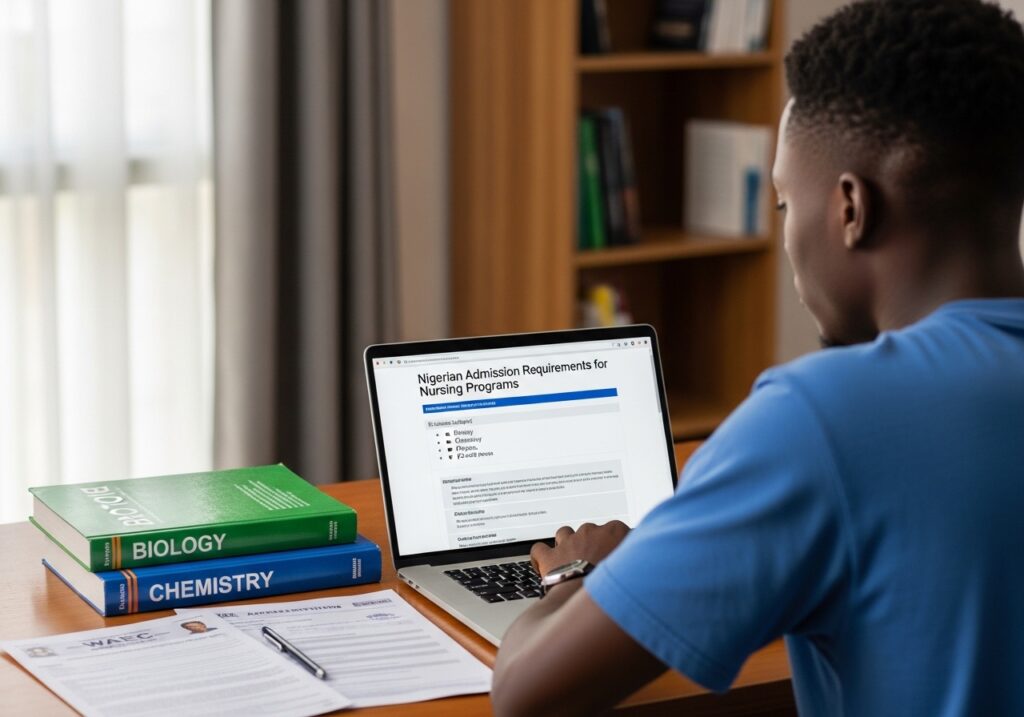
Admission into an online nursing degree program depends on the institution, but most universities follow similar academic requirements.
Academic Requirements
Students typically need:
• Five credit passes in relevant subjects
• Biology and Chemistry as compulsory science subjects
• English Language and Mathematics
• WAEC, NECO, or equivalent certificates
Since nursing is science based, strong performance in biology and chemistry is very important for any nursing degree online application.
Additional Documentation
Applicants may also be required to submit:
• Completed application form
• Academic transcripts
• Identification documents
• Passport photographs
• Recommendation letters
• Health clearance or background check
Some healthcare degree programs request medical fitness verification because students will eventually work in clinical environments.
It is also important to confirm that the program is recognized as an accredited nursing program by appropriate regulatory bodies in the country where you intend to study or practice.
For structured educational guidance and program exploration support, students can visit our website to learn more about academic pathways and flexible study options.
If you also need direct assistance, you can also reach out to us.
Skills Students Develop in Online Nursing Programs

An online nursing degree does more than provide academic knowledge. It prepares students with professional competencies required in healthcare environments.
Patient Care Skills
Students learn how to monitor vital signs, support patients, and assist in daily medical procedures.
Medical Knowledge
Courses include anatomy, physiology, pharmacology, and healthcare ethics, which are essential in any nursing degree online curriculum.
Communication Skills
Effective communication is critical in healthcare. Nurses must interact clearly with doctors, patients, and families.
Critical Thinking
Through case studies and simulations, learners in healthcare degree programs develop decision making abilities needed in real life situations.
These skills ensure that graduates of an accredited nursing program are well prepared for professional practice.
Career Opportunities After Completing an Online Nursing Degree

Graduating from an online nursing degree program opens multiple career opportunities depending on licensing and certification requirements.
Hospital Employment
Many graduates work in hospitals as registered nurses after completing necessary examinations.
Community Health Services
Nurses play an important role in public health education, vaccination programs, and preventive care initiatives.
Specialized Fields
With additional training, nurses can specialize in pediatrics, surgery, emergency care, mental health, and more.
International Career Paths
Depending on regulatory approval, graduates of an accredited nursing program may qualify for employment in other countries.
The healthcare industry continues to expand globally, making healthcare degree programs one of the most stable academic pathways available.
Advantages of Studying a Nursing Degree Online
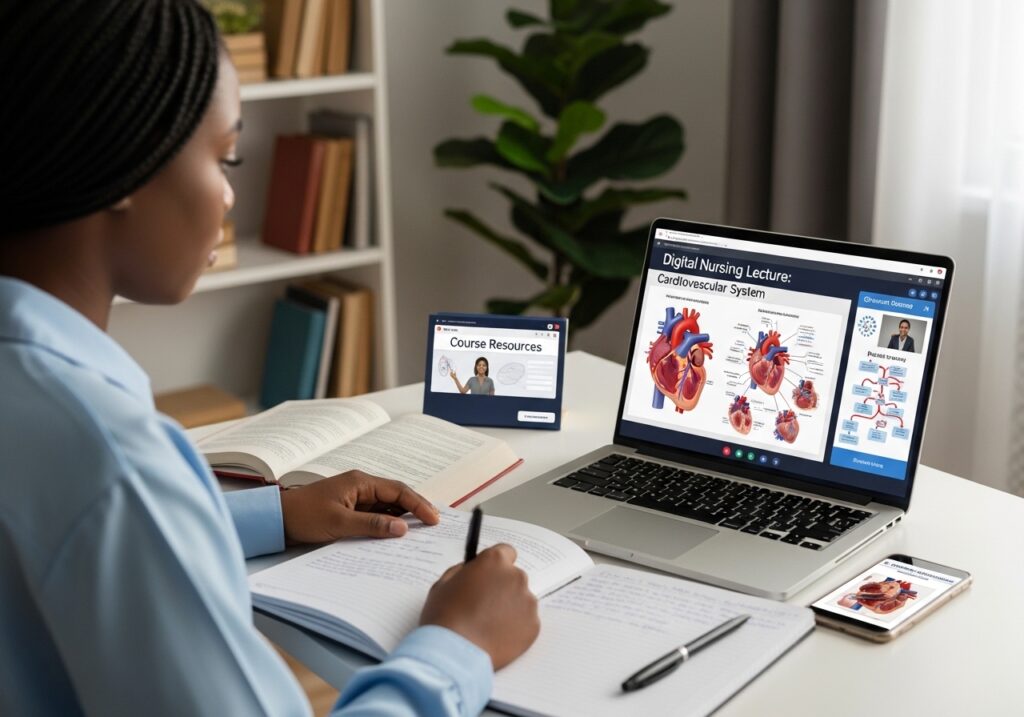
Choosing a nursing degree online offers several important benefits.
Flexibility
Students can complete theoretical coursework from different locations, making it ideal for working individuals.
Study While Managing Responsibilities
An online nursing degree allows learners to balance family commitments, employment, and education.
Access to Digital Resources
Online platforms provide recorded lectures, reading materials, discussion forums, and interactive tools.
Reduced Transportation Costs
Students save time and money by minimizing daily commuting.
These advantages make healthcare degree programs more accessible to a wider range of learners.
For additional educational resources and updates about flexible learning opportunities, you can explore our blogs.
Challenges Students Should Consider
Despite its benefits, an online nursing degree also presents challenges.
Clinical Training Requirements
Practical experience is compulsory for any legitimate accredited nursing program.
Licensing Examinations
After graduation, students must pass professional exams before practicing as licensed nurses.
Time Commitment
Even though the theory is flexible, healthcare degree programs require consistent study and dedication.
Emotional and Physical Demands
Healthcare careers require resilience, empathy, and strong interpersonal skills.
Understanding these challenges helps students prepare realistically before enrolling in a nursing degree online.
How EduTech Business Supports Students Exploring Healthcare Programs
Selecting the right online nursing degree requires careful research. EduTech Business provides structured academic guidance to help students make informed decisions.
Through EduTech Business, students receive:
• Program eligibility assessment
• Guidance on suitable healthcare degree programs
• Support in identifying an accredited nursing program
• Application documentation assistance
• Step by step enrollment guidance
The goal is to help students confidently navigate their educational journey and choose the right pathway.
Conclusion
An online nursing degree provides an accessible and flexible pathway for students who want to enter the healthcare field. While theoretical learning can be completed remotely, practical clinical training remains essential in every nursing degree online program.
Before enrolling, students must confirm that the institution offers an accredited nursing program recognized by appropriate regulatory authorities. This ensures professional credibility and eligibility for licensing.
With the increasing demand for skilled professionals in healthcare degree programs, nursing continues to be one of the most respected and impactful careers worldwide.
If you are considering this academic path, take time to research thoroughly, verify accreditation, and seek professional guidance.
Your journey into healthcare can begin with the right information, the right program, and the right guidance.
Written by Adebambo Fisher
Marketing & Communications Executive