Paying school fees does not always have to mean paying everything at once. For many Nigerian families, the biggest obstacle standing between an admission letter and a first day of lectures is not academic readiness at all: it is the size of the cheque the bursary is asking for. A school fees payment plan, where available, can turn that single overwhelming figure into something more manageable, spread across weeks or a semester instead of demanded upfront.
If you have already chosen a course, secured admission, or started your application, the question you are probably sitting with now is practical: how do you actually afford it, and in what order do the payments fall due? This guide walks through what to expect from instalment arrangements, where to confirm your institution’s tuition payment options, and what else is available if a formal plan is not on offer.
Read More: Student Grants in Nigeria: How to Find Funding for Your Education
What Is a School Fees Payment Plan?
A school fees payment plan is an arrangement, set by an individual institution, that allows a student to pay tuition and related charges in structured portions rather than as one lump sum. In practice, this can take several forms:
- Full upfront payment, where the entire fee is settled before registration closes.
- Instalment payments, split across an initial deposit and one or more follow-up payments.
- Deposit and balance arrangements, where a smaller sum secures your place and the remainder is due by a fixed date.
- Semester-based payments, common at universities that bill per semester rather than per session.
There is no single, standard arrangement that applies across Nigerian higher education. Each institution, and sometimes each faculty within it, sets its own terms and deadlines. Some universities publish a clear tuition instalment plan which Nigerian students can follow on their bursary pages; others expect full payment before matriculation and only make exceptions case by case. Treat instalments as something to confirm, not something to expect.
How University Fee Instalment Plans Usually Work
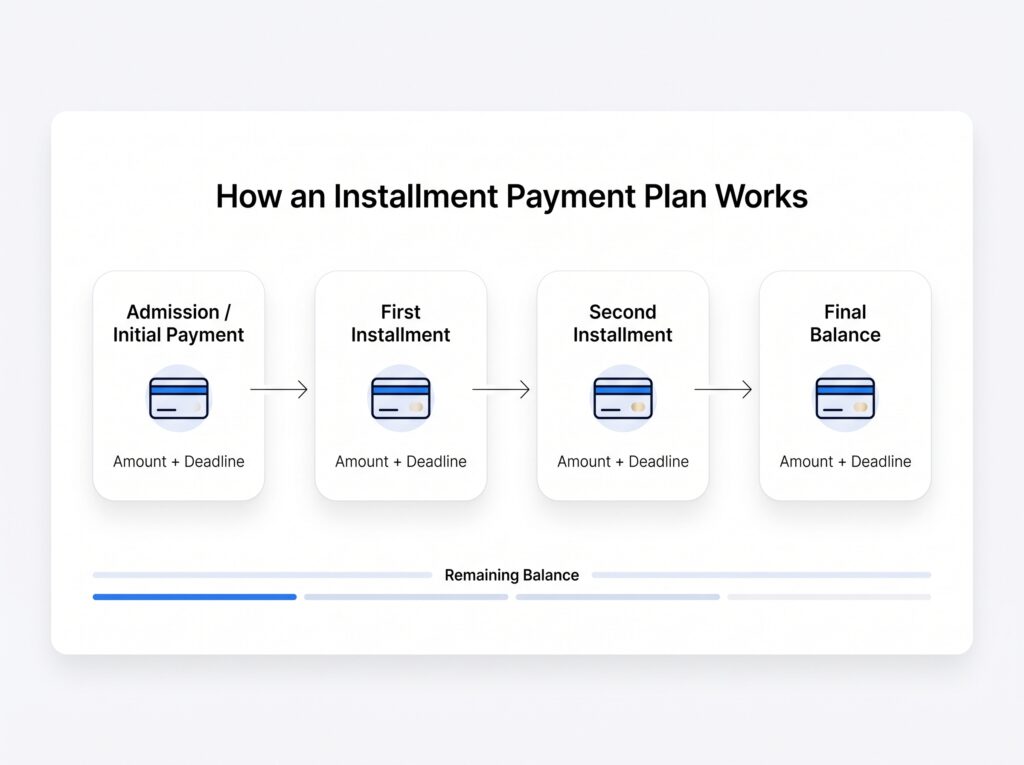
Where a university fee payment plan does exist, it tends to follow a recognisable rhythm. A typical structure might look like this:
- Admission or initial payment, paid to confirm your place and begin registration.
- First instalment, often due within a set number of weeks after resumption.
- Second instalment, usually tied to a mid-semester deadline.
- Final balance, due before examinations or before results are released.
Read More: Highest Paying Jobs in Nigeria: Top Careers and the Degrees That Can Get You There
This is an illustrative example of how a tuition instalment plan in Nigerian universities might look, not a description of any specific school’s policy. What tends to be consistent where instalments are offered is that conditions come attached. Missing a deadline can trigger late fees, a hold on registration, restricted portal access, or exclusion from examinations until the balance clears. Some schools also require a formal request letter or proof of employment before approving an arrangement. Read the fine print rather than assume flexibility continues once a first payment is accepted.
How to Find Out If Your University Allows Instalment Payments
Because policies vary so widely, the only reliable way to learn how to pay university fees at your specific institution is to check directly, using sources the school itself controls:
- Your admission letter, which sometimes states payment terms explicitly.
- The official payment policy, usually published on the finance or bursary section of the school’s website.
- The student portal, where fee breakdowns and deadlines are listed per session.
- The bursary or finance office, which can confirm current terms by phone, email, or in person.
- Your department or faculty office, since some programmes, particularly postgraduate ones, follow different terms from the general undergraduate policy.
Policies also change between sessions, so do not assume last year’s arrangement still applies. Confirming directly, close to your registration date, is the safest way to avoid a payment surprise mid-semester.
Other Ways Students Can Manage University Fees

Not every institution offers a formal instalment plan, and even where one exists, it may not cover everything you need. Several tuition payment options are worth considering alongside, or instead of, an instalment arrangement:
- Personal savings, built up before resumption to reduce last-minute borrowing.
- Family support, still the most common source of student financing Nigeria households rely on.
- Employer sponsorship, particularly relevant for working students on part-time or executive programmes.
- Scholarships and grants, offered by universities, private foundations, and some state governments, each with its own eligibility criteria.
- Education loans, discussed below.
- Flexible tuition payment formats, which spread costs over a longer period and let students keep earning while they learn.
Combining two or three of these is often more realistic than expecting one to cover everything, especially once accommodation, transport, and materials are added to tuition.
Read More: Online Bachelor’s Degree: A Complete Guide for Working Adults
School Fees Loans and Education Financing
For many Nigerian students, a school fees loan has become realistic since the establishment of the Nigerian Education Loan Fund (NELFUND) under the Student Loans (Access to Higher Education) Act. NELFUND is a federal government scheme offering interest-free loans that provide financial support to qualified Nigerians for tuition, other fees, and upkeep during their studies in approved tertiary and vocational institutions. Eligibility generally requires enrolment at a public federal or state institution with records uploaded to the NELFUND verification portal; private university students are not currently covered.
Before applying for any school fees loan, whether through NELFUND or a private lender, a few basics are worth understanding:
- Who may qualify, since government and commercial student financing options in Nigeria differ sharply on eligibility.
- Interest and repayment terms, which vary enormously between a government-backed loan and a commercial one.
- Application requirements, including admission letters, identification, and bank details.
- Repayment timing, which for NELFUND begins after graduation rather than during study.
Be cautious about borrowing more than you need. A loan eases the pressure of an upfront payment, but it remains an obligation that follows you afterwards, so match the amount to your real shortfall. Private university students, for whom NELFUND does not currently apply, tend to rely on commercial education financing or family support instead, and terms should be compared carefully before committing.
Choosing a Programme That Fits Your Budget
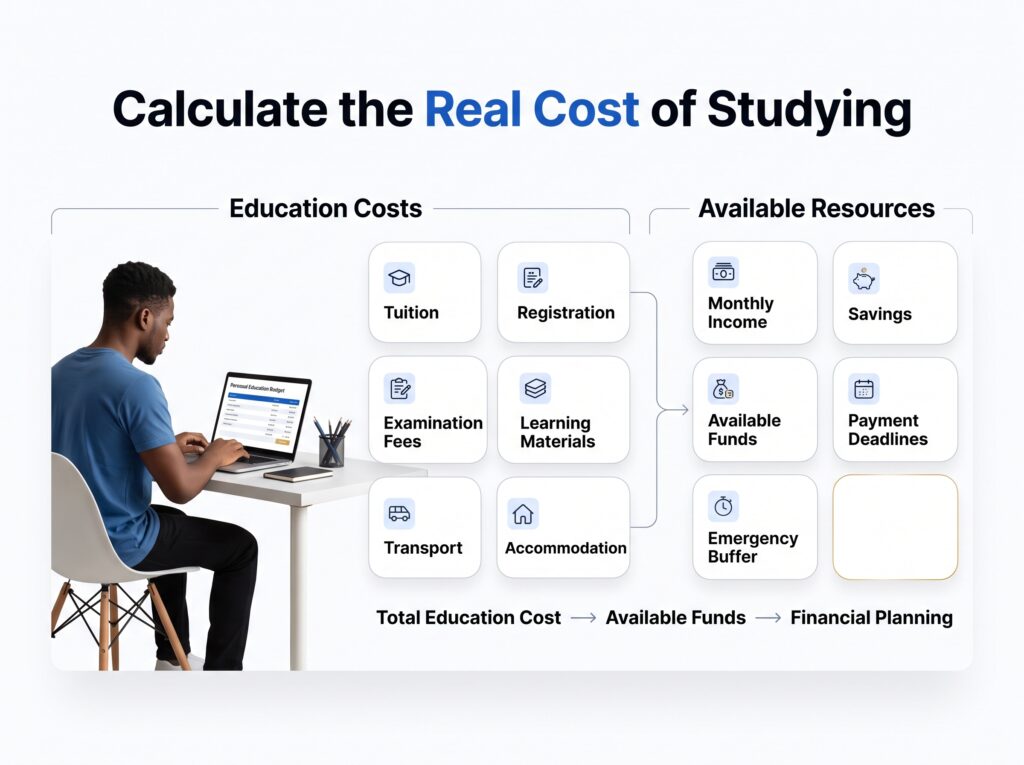
Tuition is rarely the only cost of a degree. When comparing programmes, set out the full picture rather than tuition alone:
- Registration and acceptance fees
- Learning materials and textbooks
- Examination fees
- Technology or platform costs, particularly for distance and online programmes
- Transportation, where relevant
- Accommodation
A programme with lower advertised tuition is not automatically the cheaper option once these costs, and the flexibility of its payment terms, are factored in. A slightly higher-fee programme with a genuine instalment option, or one that lets you earn while you study, can work out more affordable than a cheaper one demanding full payment upfront.
Flexible Study Options Through EduTech Business

For students needing more room to manage cost and income together, flexible study formats are worth exploring. Distance learning, online programmes, and part-time study let students keep working, or spread study commitments around other responsibilities, while working toward a recognised qualification. Partner institutions promoted through EduTech Business include the ABU Distance Learning Centre and Babcock University’s BUCODeL, both running NUC-accredited distance and part-time programmes built around working students’ schedules.
A flexible study format is not automatically the same as flexible tuition payment terms. A part-time or distance programme may still require full payment or run its own separate schedule, so always confirm specific terms with the institution rather than assuming one follows from the other.
How to Create a Payment Plan for Yourself
Even where an institution offers no formal instalment option, you can build your own approach around your income and deadlines:
- Calculate your total education costs, tuition plus the extras listed above.
- Determine how much you already have in savings.
- Identify your monthly income, or your household’s, if family is contributing.
- Check your university’s actual deadlines rather than assuming a generic timeline.
- Work out how much to set aside per month to meet each deadline comfortably.
- Build in a small buffer for late fees or unexpected costs.
- Avoid taking on more debt than your shortfall genuinely requires.
- Review the plan before enrolment, and adjust it if income or terms change.
This kind of budgeting does not replace confirming your institution’s official policy, but it puts you in control of the timeline rather than reacting to it under pressure.
Read More: Professional Certifications That Actually Pay Off: A 2026 Career Guide
Frequently Asked Questions
Can I pay university fees in instalments? At some institutions, yes. It depends entirely on the specific university’s policy, so check with the bursary or finance office directly rather than assuming.
What is a school fees payment plan? An arrangement, set by an individual institution, that allows tuition to be paid in portions, such as a deposit followed by instalments, rather than as a single upfront payment.
How do tuition instalment plans work? Typically through an initial payment followed by scheduled instalments tied to deadlines, with conditions such as late fees or registration holds if a deadline is missed.
Can I get a loan to pay school fees? Nigerian students at eligible public institutions can apply for an interest-free loan through NELFUND. Students at private universities generally need to explore commercial financing or family support instead.
What happens if I cannot meet a tuition deadline? Consequences vary by institution but can include late fees, restricted portal access, or being barred from registration or exams. Contact your bursary office early if you anticipate a delay.
Which universities allow flexible tuition payments? This varies and changes between sessions, so confirm directly with your specific institution rather than relying on general assumptions.
How can I reduce the financial pressure of university fees? Combine strategies: build savings, explore scholarships and grants, compare the full cost of programmes rather than tuition alone, and consider flexible study formats that let you earn while you study.
Affording a degree in Nigeria today usually means combining several strategies rather than relying on one. Where genuinely available, structured instalments can ease the pressure, but they are not universal, and confirming the details directly with your institution remains the only reliable step. Between instalment arrangements, scholarships, education loans such as NELFUND, and flexible study formats, most students can piece together an approach that fits their situation, provided they start planning early rather than scrambling close to a deadline.
Planning how to afford your education? Speak with an EduTech Business advisor to compare programmes, study formats, and university options that fit your academic goals and financial situation. You can also browse the EduTech Business blog for more guidance, or get in touch with questions specific to your circumstances.