Every year, thousands of students across the globe set out on one of the most consequential journeys of their lives: applying to university. It is a process filled with hope, careful planning, and no small amount of anxiety. That vulnerability is exactly what fraudsters exploit. Admission scams have become one of the fastest-growing forms of education fraud, targeting students at the moment when they are most eager and most likely to trust someone who promises to make things easier. The consequences range from financial loss to visa rejection to shattered academic futures.
The scale of the problem is alarming. In the United States alone, financial aid fraud in higher education has surpassed $100 million per year, and fraudulent activity continues to rise year on year. In the UK, six universities reported £7.1 million paid out to fraudulent applicants between 2022 and 2024. Internationally, over 700 Indian students in Canada were flagged in fake visa and admission fraud cases in 2024 alone. These are not isolated incidents. They represent a sophisticated, organised threat that demands serious attention from every student, parent, and institution involved in higher education.
Read More: How to Apply for International Scholarships: A Step-by-Step Guide
What Are Admission Scams?
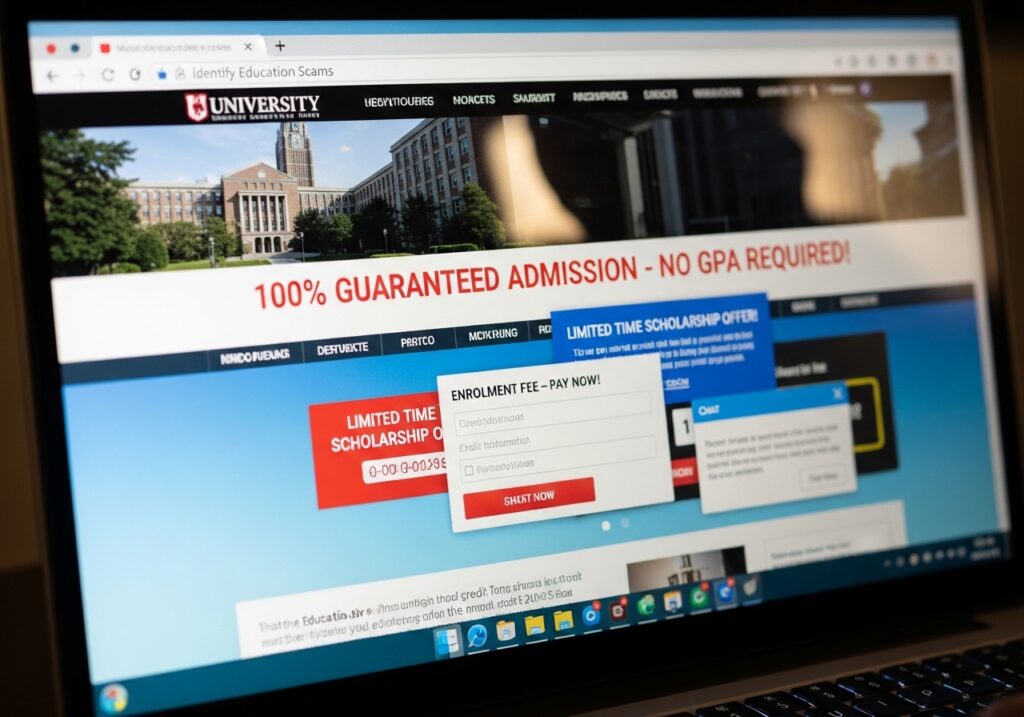
Admission scams are fraudulent schemes designed to deceive students who are in the process of applying to colleges, universities, or study-abroad programmes. They typically involve individuals or organisations posing as legitimate education consultants, admission agents, scholarship bodies, or even universities themselves.
The goal is almost always financial: to extract payments from hopeful students, steal personal documents, or access financial aid funds. University admission fraud comes in several forms, and understanding each type is the first step towards protecting yourself.
Common Types of Admission Fraud
Fake admission agents are perhaps the most widespread threat. These individuals pose as certified education consultants, offering “guaranteed” admission to top universities for a fee. There is no such thing as a guaranteed university place; legitimate agents and consultants can advise and support you, but they cannot buy you a seat.
Fraudulent university websites are designed to mimic the look and feel of real institutions. Students fill out applications, pay fees, and receive convincing-looking offer letters, only to discover the institution does not exist. Fake scholarship offers follow a similar pattern: students are told they have won funding, then asked to pay an “administration fee” to release it.
Payment scams occur when agents or consultants collect tuition deposits or application fees and disappear without a trace. In some cases, students only discover the fraud when they attempt to enrol. In 2024, syndicates in Malaysia were found to be selling fake degrees on social media for the equivalent of hundreds to thousands of pounds, using the names of legitimate universities to lend credibility.
Warning Signs Every Student Should Know

Recognising the red flags of education scams can save you from devastating loss. Watch out for:
- Unrealistic guarantees: No legitimate agent can promise admission to any university. If someone tells you otherwise, walk away.
- Pressure to pay quickly: Scammers create artificial urgency. Legitimate institutions and accredited agents will always allow you reasonable time to make decisions.
- No verifiable contact details: A real consultancy will have a registered address, a verifiable phone number, and a professional website with clear accreditation information.
- Requests for sensitive documents upfront: Agents who ask for your passport, financial statements, or personal ID before any formal agreement is signed should be treated with serious caution.
- Communication only through personal email or messaging apps: Legitimate universities communicate through official institutional email addresses, not Gmail or WhatsApp accounts.
Read More: 5 Mistakes Students Make When Applying for Online Degrees and How to Avoid Them
How to Verify Genuine Admission Sources
Before engaging with any agent or consultancy, do your research. Start with the official university website: all legitimate institutions list their admissions processes, fees, and contact information publicly. If you are applying to UK universities, UCAS is the official and trusted application portal for undergraduate programmes, and using it directly removes many of the risks associated with third-party agents.
For rankings and credibility checks, QS Top Universities offers a comprehensive and regularly updated database of accredited institutions worldwide. If a university is not listed on a recognised ranking or accreditation body, that is a significant red flag.
To verify an agent, check whether they are registered with a recognised professional body. In the UK, this includes the British Council and UKCISA. Ask for written proof of any partnerships they claim to have with universities. A genuine partner will be listed on the university’s own website.
Steps to Protect Yourself from Admission Scams

Taking a methodical approach to your application process is your strongest defence against university admission fraud.
- Never pay without a paper trail. Always use bank transfers to institutional accounts, never cash, and always request a formal receipt. Confirm payment details directly on the university’s official website before transferring anything.
- Keep records of all communication. Save every email, receipt, and document. If something goes wrong, these records will be essential for any report or legal process.
- Do not share documents blindly. Your passport, financial statements, and personal identification should only be submitted through official university portals or verified platforms.
- Take your time. Scammers rely on urgency. Legitimate admission processes have clear timelines. If someone is rushing you, slow down.
- Cross-check everything independently. If an agent tells you they have a partnership with a particular university, contact that university directly to confirm.
Read More: Common Online University Admission Mistakes in Nigeria
What to Do If You Encounter an Admission Scam
If you believe you have been targeted by education scams, act quickly. Contact your country’s national fraud or cybercrime reporting body: in the UK, this is Action Fraud; in Nigeria, the Economic and Financial Crimes Commission (EFCC) handles such cases. Report the incident to the university the scammer claimed to represent; institutions take these reports seriously and can warn other prospective students.
Inform your bank immediately if any payments were made. Many financial institutions have fraud recovery procedures that can help retrieve funds if reported swiftly. And where possible, share your experience through verified student forums and communities. Warning others is a powerful way to limit the reach of these schemes.
How EduTech Business Supports Safe, Verified Admissions
Navigating the university application process should not feel like navigating a minefield. At EduTech Business, the commitment is to transparency at every step. We operate through direct, verified partnerships with accredited universities, ensuring that students are never left wondering whether an offer is real. Communication is handled through official channels, and there are no hidden fees or opaque processes.
The dedicated support team is available to guide students from initial enquiry through to enrolment, providing clarity and verified information at each stage. If you have questions or concerns about any aspect of the admissions process, the contact page connects you directly with a team that understands the risks students face and is equipped to help. For further reading on navigating higher education safely, explore the EduTech Business blog.