There is a question running through Nigerian education circles, and it is more urgent now than it has ever been: is online learning still a backup plan, or has it quietly become a genuine first choice? Five years ago, most students and parents treated distance learning with caution, seeing it as a compromise for those who could not secure conventional admission. Today, that narrative is shifting fast, and the evidence is difficult to ignore.
Universities have overhauled their digital infrastructure, new open universities have received NUC licences, and a younger generation of applicants is actively choosing flexible online programmes as a preferred mode of study. The question is no longer whether distance learning is legitimate. The real question is whether institutions are moving fast enough to meet the demand.
Read More: Can You Work and Study Online at the Same Time?
The Shift That COVID Started (and What Stayed)
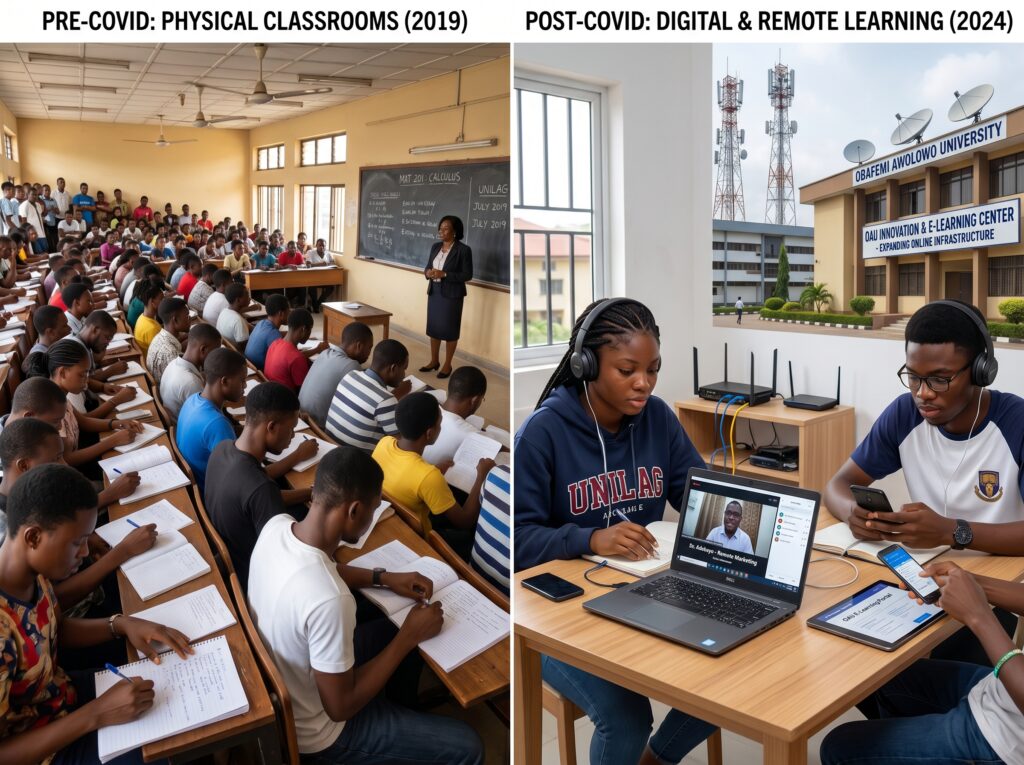
When universities shut their gates in 2020, nobody planned for a permanent transformation. Emergency online learning was messy, improvised, and frustrating for students and lecturers alike. But something unexpected happened in the aftermath: students got comfortable with flexible study, and many of them did not want to give it up.
The pandemic accelerated a shift that was already underway. The National Universities Commission (NUC) had been developing its open and distance learning framework for years, but COVID pushed institutions to move faster. Universities invested in learning management systems, built out student support structures, and trained academic staff on digital delivery. When campuses reopened, those systems stayed, and students noticed.
Today, more than 20 universities are approved by the NUC to operate distance learning centres, alongside the National Open University of Nigeria (NOUN), which operates 72 study resource centres across the country. Institutions like Ahmadu Bello University’s Distance Learning Centre (ABU DLC) and Babcock University’s Centre for Open Distance and e-Learning (BUCODEL) have gained visibility and student trust. Online education is no longer a temporary measure. It is becoming a structural feature of Nigerian higher education.
Where Distance Learning in Nigeria Stands Today
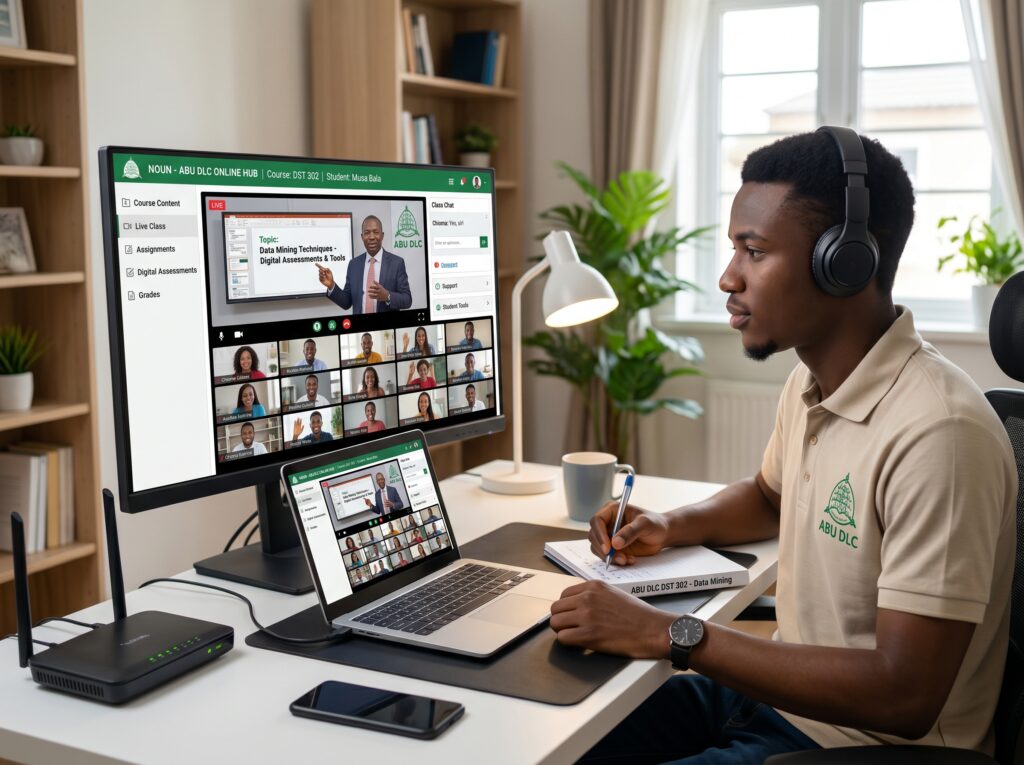
The numbers tell a compelling story. Nigeria’s online education market was valued at approximately USD 143 million in 2024 and is projected to reach nearly USD 298 million by 2029, growing at a compound annual rate of over 15%. A separate estimate puts the broader Nigerian e-learning and digital classrooms market at USD 300 million, driven by smartphone penetration, a youthful population, and rising demand for flexible education among professionals.
Employer perception has also shifted in key sectors. Graduates of NUC-accredited distance learning programmes from institutions like ABU DLC and BUCODEL receive the same degree certificates as their on-campus peers. Sectors including technology, business administration, financial services, and public administration have become increasingly accepting of online credentials, provided the awarding institution carries NUC accreditation. The credential itself matters far less than it once did; increasingly, employers in these fields are more focused on demonstrated competence, certifications, and professional track record alongside the degree.
The core advantages driving this growth are straightforward:
- Flexibility: Students can study around work, family, and other commitments.
- Affordability: Removing costs like accommodation, transport, and feeding makes degree programmes significantly cheaper.
- Geographic access: A student in Gombe or rural Bayelsa can access a programme at a respected institution without relocating.
- Career continuity: Working professionals can upskill or retrain without pausing their careers.
Read More: Is an Online Degree Valid for Government Jobs?
The Challenges That Still Need Honest Attention
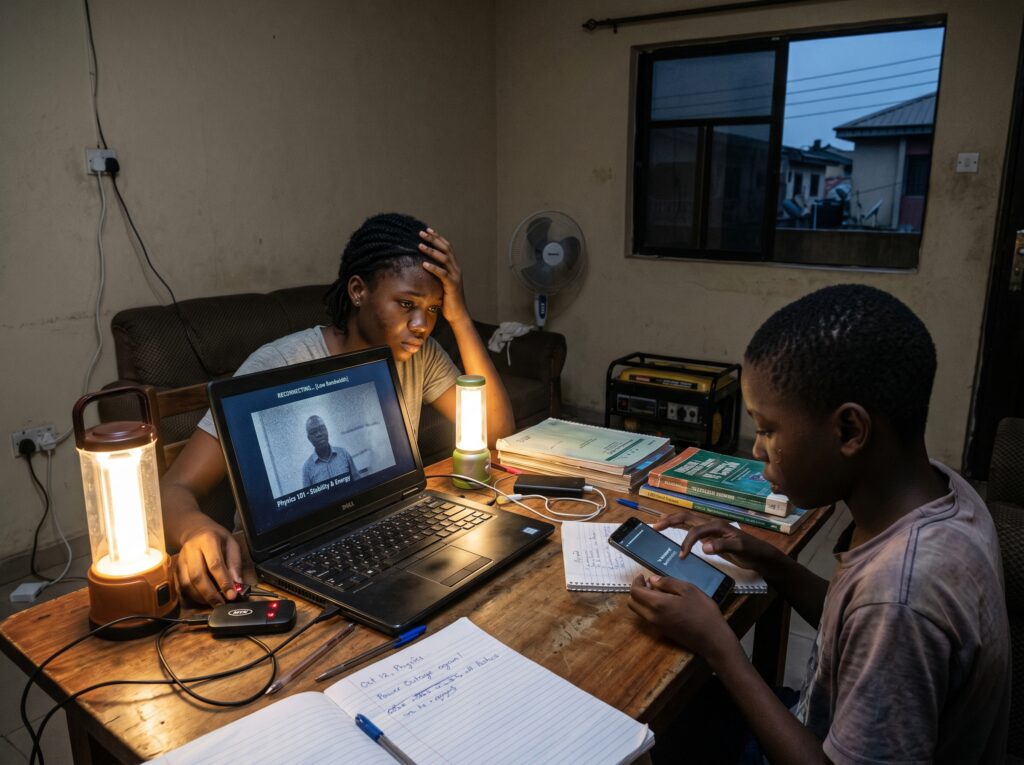
Any credible assessment of distance learning in Nigeria must acknowledge what is not yet working. Enthusiasm about growth should not gloss over real barriers that affect real students every day.
Internet access remains the most persistent obstacle. As of 2024, only around 38% of Nigeria’s population was online, and affordability continues to limit broadband use, particularly in rural areas. A UNICEF 2025 report noted that 78% of Nigerian youth lack digital literacy, which compounds the challenge of accessing online programmes effectively.
Electricity remains an equally stubborn problem. Learners managing irregular power supply alongside assignment deadlines and live sessions face a practical barrier that curriculum design cannot solve on its own. Beyond infrastructure, other challenges include:
- Weak or outdated learning management systems at some institutions
- Limited student engagement models that leave remote learners feeling isolated
- Inconsistent quality of assessment and examination processes online
- Poor communication channels between students and academic staff
The critical point here is that moving content online is not the same as building a functioning distance learning programme. Institutions that simply digitise their traditional lectures without redesigning the student experience are not truly offering distance learning. They are offering a poorer version of campus learning, delivered remotely.
What the Best Distance Learning Programmes Are Doing Differently
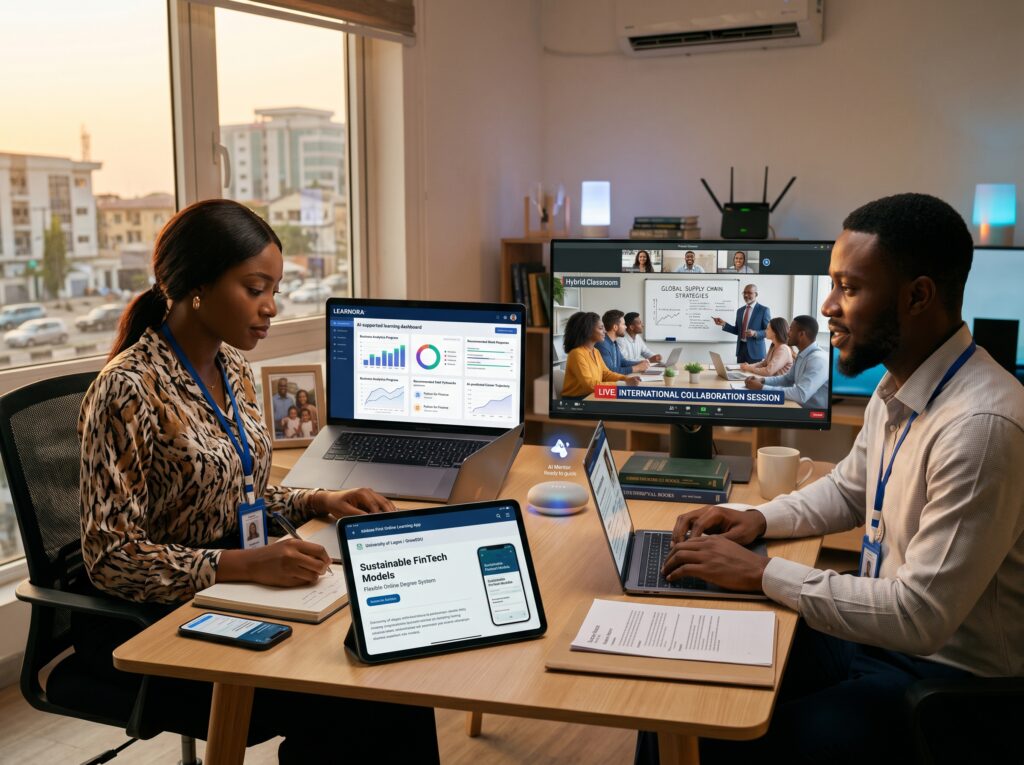
The institutions setting the standard understand that experience matters as much as curriculum. ABU DLC and Babcock University’s BUCODEL are two programmes frequently cited for doing this thoughtfully.
What distinguishes stronger programmes:
- Structured learning management systems with clear academic calendars and organised course materials
- Live sessions and real-time interaction that prevent students from feeling abandoned between lectures
- Dedicated student support teams who respond to queries and guide learners through challenges
- Career guidance embedded into the programme, not tacked on as an afterthought
- Digital assessment systems that are secure, fair, and academically rigorous
- Responsive communication across multiple channels, including mobile-friendly options
Babcock University’s BUCODEL offers undergraduate programmes in Computer Science and Accounting, designed to match the rigour of on-campus study. ABU DLC has built its reputation over many years as one of the most established distance learning centres in Nigeria, offering a range of undergraduate and postgraduate options focused on nationwide accessibility.
A well-run online programme is not a lesser version of university education. It is a differently designed version, and when done properly, it works.
The Student Profiles That Benefit Most
Distance learning is not the right fit for every student, but it is the ideal fit for a significant number of them. Understanding who benefits most helps prospective learners make smarter decisions.
- Working professionals are perhaps the most obvious beneficiaries. An accountant in Lagos who needs a degree to secure a promotion can study in the evenings and at weekends without resigning or reducing hours.
- Parents and caregivers managing family responsibilities alongside personal ambitions gain access to education on terms that fit their lives.
- Students outside major cities who cannot afford or access relocation to campuses in Abuja, Lagos, or Ibadan now have credible alternatives.
- Career switchers looking to move into technology, business, or administration from an unrelated field can access structured programmes without starting over.
- Second-chance learners, including those who were unable to gain conventional admission due to JAMB scores or financial constraints, find distance learning a genuine pathway rather than a consolation prize.
The common thread across all these profiles is that flexibility creates access. Where traditional higher education draws boundaries, well-designed distance learning removes them.
What to Expect Over the Next Three to Five Years
The trajectory for distance learning in Nigeria points clearly upward, though the path will not be without friction. Several trends are converging to reshape what online education looks like over the next few years.
- Mobile-first learning is already emerging as a priority, given that most Nigerians access the internet through smartphones. Programmes optimised for mobile will reach a significantly larger audience.
- AI-supported education, including personalised learning pathways, automated feedback, and intelligent tutoring systems, is beginning to enter the Nigerian EdTech space and will become more prominent.
- Microlearning and short-course credentials are growing in relevance as employers begin valuing stackable certifications alongside traditional degrees.
- Hybrid learning models, which combine online delivery with occasional in-person assessments or sessions, are likely to become standard for many institutions.
- Stronger digital assessment infrastructure will address current concerns around exam integrity. The World Economic Forum has consistently highlighted digital skills and flexible credentialing as central to workforce development globally, a trend Nigeria’s employers are beginning to respond to.
The bigger question is whether institutions will adapt quickly enough. The demand is growing; the infrastructure and student expectations are rising; the regulatory framework is developing. Institutions that invest seriously in quality will build lasting reputations. Those who treat distance learning as a revenue stream without commensurate investment in delivery will find students voting with their enrolment choices.
How EduTech Business Helps You Navigate This
Knowing that distance learning is legitimate is one thing. Finding the right programme, understanding admission requirements, comparing options, and navigating enrolment is another matter entirely. That is where EduTech Business plays a direct role.
EduTech Business helps Nigerian students discover trusted, NUC-approved programmes, compare universities, and access admissions support from people who understand the landscape. Partner institutions include ABU DLC and Babcock University BUCODEL, two of the most credible and established distance learning programmes in the country. Whether you are a working professional exploring postgraduate options, a school leaver weighing your admission routes, or an HND holder looking to convert your qualification to a degree, EduTech Business provides the guidance and access to get you started on the right path.
Explore more on the EduTech Business blog for comparisons, programme reviews, and practical guides to online education in Nigeria.
Frequently Asked Questions
Is distance learning recognised in Nigeria? Yes. Distance learning programmes offered by NUC-accredited institutions are officially recognised in Nigeria. The NUC has an Open and Distance Learning division and accredits programmes at over 20 approved universities. Graduates receive the same degree certificates as on-campus students.
Are online degrees accepted by employers? Increasingly, yes. Employers in sectors such as technology, business, finance, and public administration are accepting degrees from NUC-approved institutions regardless of whether they were earned online or on campus. Institutional reputation and demonstrated competence remain the key factors.
Which universities offer trusted distance learning programmes in Nigeria? Among the most established are NOUN, ABU DLC, Babcock University BUCODEL, University of Ibadan Distance Learning Centre, and University of Lagos Distance Learning Institute. Always verify current NUC accreditation before enrolling.
What are the main benefits of distance learning in Nigeria? The core benefits are flexibility, affordability, geographic access, and the ability to continue working while studying. For many Nigerians, it is the most practical route to a recognised university degree.
Ready to take the next step?
Explore Nigeria’s top distance learning programmes with EduTech Business. Compare trusted universities and speak with an advisor about the right programme for your goals.