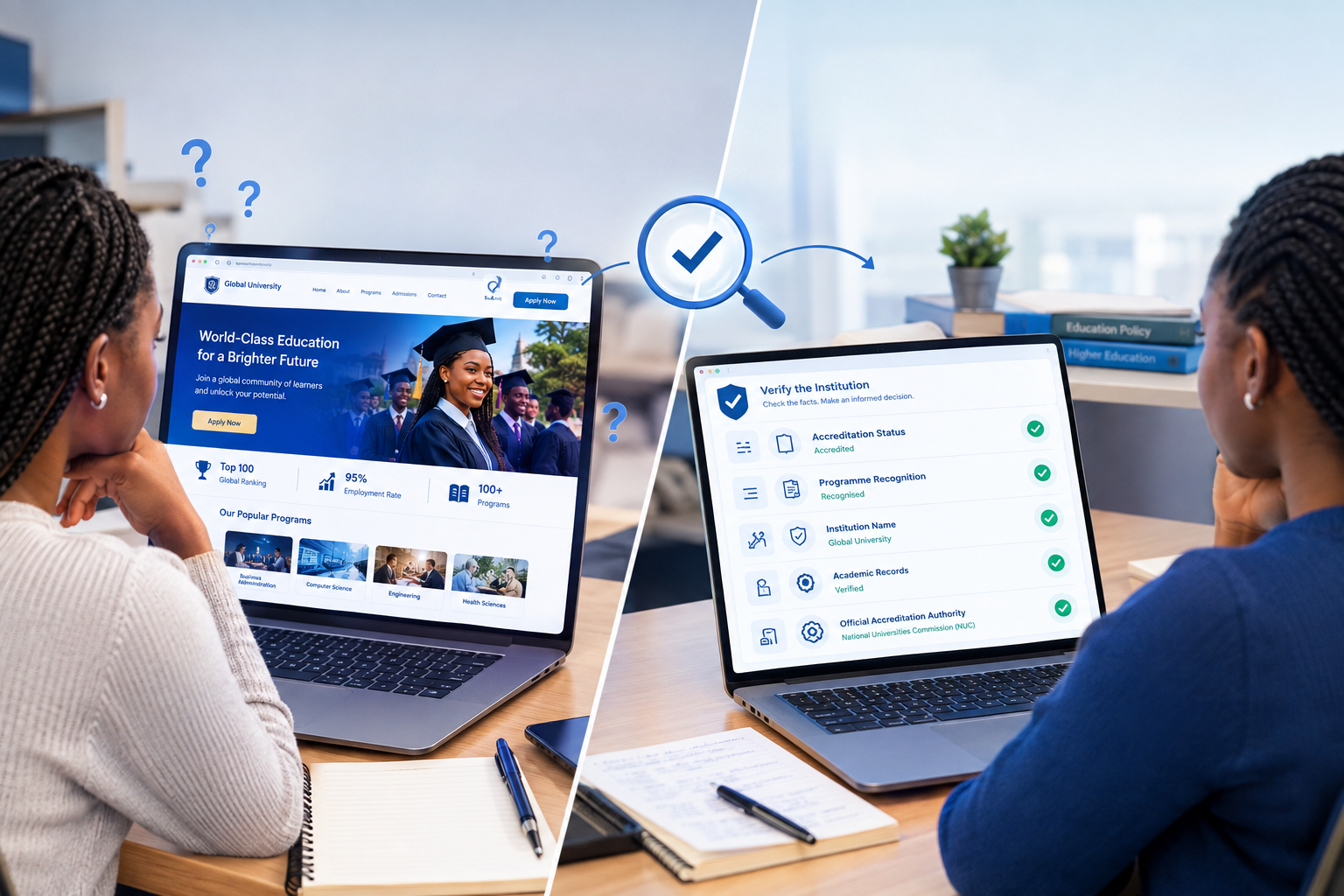
There is a particular hesitation that comes with going back to school as an adult. It rarely sounds like “I can’t do this.” It sounds more like “I’ll look into it next year,” said for the third year running by someone with a full workload, a family that needs them, and a budget already spoken for. The doubt is not about ability. It is about whether education fits into a life that is already full.
That question deserves a straight answer rather than encouragement. Returning to education as a working adult is demanding, and pretending otherwise helps nobody. But adult learners arrive with what younger students lack: workplace experience, a clearer sense of what the qualification must do for them, and discipline built from years of managing competing responsibilities. This guide is a practical roadmap through the decisions that matter, from choosing between a degree and a certification to managing money, time, and the confidence wobble that often comes first.
Read More: Online Bachelor’s Degree: A Complete Guide for Working Adults
Why Adults Decide to Go Back to School
Motivations vary more than people assume, and being honest about yours shapes everything that follows. Common reasons for pursuing adult education include:
- Qualifying for a promotion with a formal educational requirement attached
- Making a career change through education into a different industry
- Completing a degree interrupted years ago
- Meeting a professional licensing or registration requirement
- Building skills the current role now demands, or raising earning potential
- Preparing for a job market that is visibly shifting
That last point is not speculation. The World Economic Forum’s Future of Jobs Report 2025 found that employers expect 39% of workers’ core skills to change by 2030, with job disruption affecting around 22% of roles over the same period. Lifelong learning is no longer a niche choice for the ambitious few.
Is Going Back to School as an Adult Worth It?
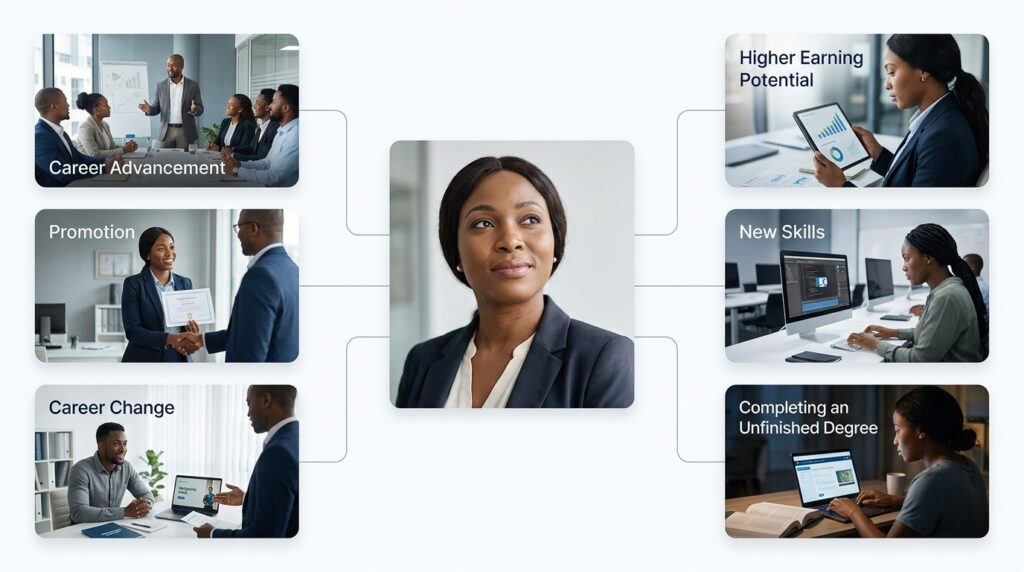
It depends on what you are buying and why. The benefits can be substantial: access to roles that screen for formal qualifications, credibility in a new field, new skills, an expanded network and eligibility for further study later.
The trade-offs are equally real. Tuition is money you could deploy elsewhere, and study hours are hours not spent earning, resting or with family. Every programme carries an opportunity cost, and a poorly chosen one carries all the cost with little of the return.
A useful exercise before enrolling: write down the role you are targeting, then check actual job adverts for it. Do they require the qualification you are considering, or experience you could build another way? If most list the credential as essential, the case is strong. If none do, you may be solving the wrong problem.
Choosing Between a Degree, Certification and Short Course
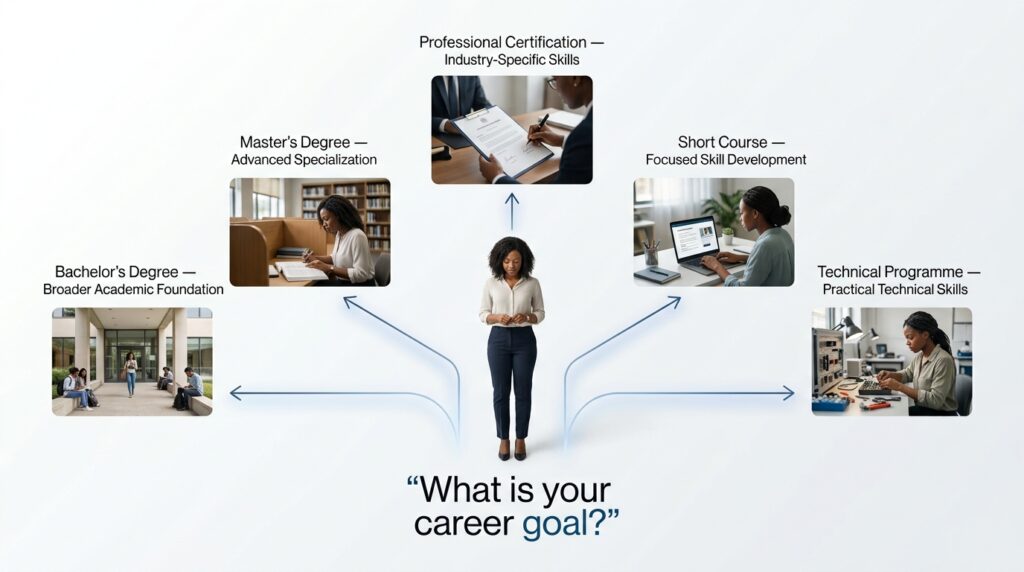
Adults do not always need to begin with a full degree. Matching format to goal saves both money and years.
| Option | Best for |
| Bachelor’s degree | Building or completing a broader academic foundation. |
| Master’s degree | Advanced specialisation or senior career progression |
| Professional certification | Industry-recognised, role-specific skills |
| Short course | Focused development of a skill |
| Bootcamp or technical programme | Practical, hands-on technical capability |
A mid-career marketer moving into analytics may get further with a recognised certification and a portfolio than with a second degree. Someone blocked from promotion by a stated degree requirement has no such shortcut. The format should follow the obstacle.
Read More: MBA in Nigeria: Online vs. Part-Time vs. Executive, Which Route Is Right for You?
How to Choose the Right Programme
Once the format is clear, work through these questions before you apply:
- What role or outcome am I targeting?
- Does it genuinely require a degree, or would a certification suffice?
- Does the schedule fit my actual working week, not an idealised one?
- Is the institution properly recognised and accredited?
- What is the full cost, including materials and examination fees?
- Do I meet the admission requirements now?
- What career outcomes has it supported for previous students?
The accreditation question matters more than any other, particularly with online providers. Our guide on how to verify if an online university is legitimate walks through checking institutional status with the relevant national authority before you pay anything.
Online and Flexible Learning for Adult Students
Flexible degree programmes have made returning to university realistic for people who could never relocate or attend weekday lectures. The advantages are concrete: study around shift patterns, no commute, recorded material you can revisit, and the ability to keep earning throughout.
One caveat is worth stating plainly: flexible does not mean effortless. Online study shifts the burden of structure onto you. Without a timetable imposing rhythm, progress depends on self-discipline, deliberate time management and a reliable connection. Distance learners can also feel isolated, which is why programmes with active cohorts and real tutor contact tend to see better completion rates. Our comparison of distance learning and online learning sets out how the two differ in practice.
How to Balance Work and School
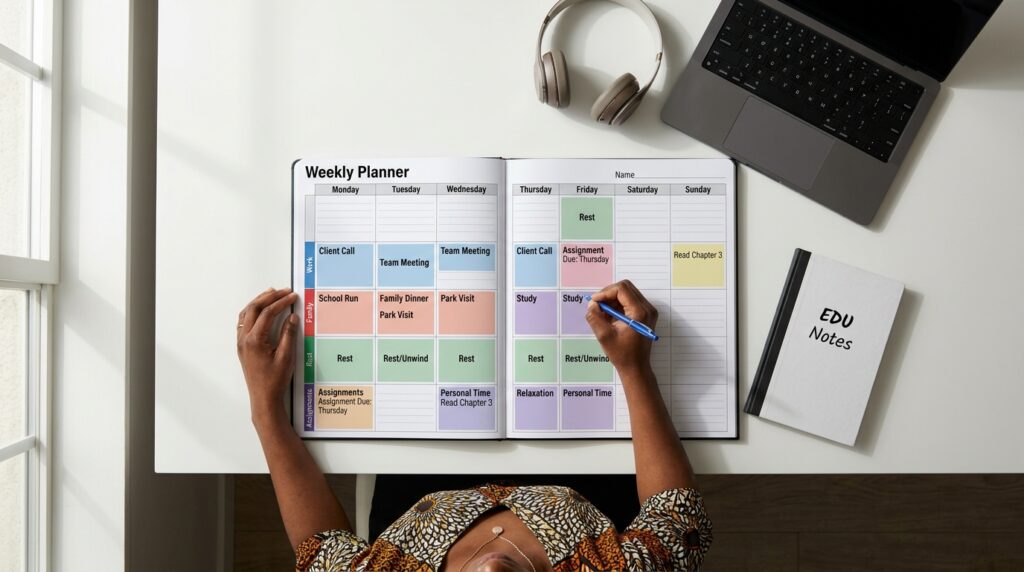
Balancing work and school is mostly a logistics problem, and logistics problems respond to systems rather than willpower.
- Map a realistic weekly schedule before term begins, based on the week you actually have.
- Protect study blocks in your calendar and treat them as fixed commitments.
- Tell your household what you are doing and what you need from them.
- Inform your employer where the relationship allows it; some will offer flexibility.
- Break assignments into small tasks with interim deadlines.
- Resist overloading your first term. Three modules finished well beats five abandoned.
- Create a dedicated study space, however small, so starting requires no setup.
Read More: Professional Certification vs Degree: Which One Actually Advances Your Career?
Studying while working is sustainable when the load is honest. It collapses when the plan assumes a version of you who never gets tired, sick or called into a late meeting.
Returning to Education After Years Away
Returning to college after years out is as much an emotional adjustment as an academic one. Many adult learners describe the same worries: feeling behind, doubting whether they can still write an essay, being intimidated by learning platforms, or simply being older than everyone in the virtual room.
Those feelings are common, and they usually fade within the first term. What is worth holding onto is that professional experience is an academic asset, not a deficit. Adults bring workplace knowledge that gives abstract theory immediate context, the discipline to meet deadlines, clearer goals and communication skills sharpened by practice. The gap in study habits closes far faster than the gap in real-world understanding would for a school leaver. If technology is the specific worry, ask what onboarding support exists before enrolling; most flexible programmes now run orientation sessions precisely because the concern is so widespread.
How to Finance Your Education
Funding usually comes from a combination of sources rather than one:
- Personal savings, planned across a term rather than a year
- Employer sponsorship or tuition assistance, where offered
- Scholarships and grants, including those aimed at mature students
- Instalment plans, where the institution provides them
- Part-time study, spreading both cost and time commitment
Employer support is worth pursuing properly. Build a short business case linking the programme to results your organisation cares about, then ask HR what exists in writing. Not every institution offers payment plans or financial aid, so confirm fees, deadlines and refund terms directly with the admissions office before committing.
Building a Career Change Through Education

Education opens doors, but it rarely walks you through them by itself. A career change through education tends to follow a sequence:
Career goal → skills gap → programme selection → qualification → practical experience → networking → transition
The steps after the qualification matter as much as the qualification itself. Graduates who move industries successfully usually build something demonstrable while studying: a project, a placement, freelance work or volunteering in the target field. Paired with deliberate networking, the credential becomes evidence rather than a claim.
Read More: Can You Work and Study Online at the Same Time?
How EduTech Business Helps Adult Learners Find Flexible Education
EduTech Business works as a discovery and guidance layer for exactly this decision, connecting learners with flexible degrees and professional certifications through partner institutions rather than delivering programmes directly. If you are completing an undergraduate qualification around work, options such as ABU Distance Learning Centre or Babcock BUCODeL may fit. For a postgraduate business qualification built for working professionals, partners such as MSBM are worth exploring. See the full range on the partner institutions page, or speak with an education adviser about matching a programme to your goal.
Your First 30 Days Back in Education
- Week 1: Define the career outcome you want and the qualification it requires.
- Week 2: Research programmes and institutions, and verify their accreditation.
- Week 3: Compare costs, schedules, admission requirements and start dates.
- Week 4: Apply, map your study schedule into your calendar and set up your study space.
Our university admission requirements checklist covers what to gather before you submit anything.
Frequently Asked Questions
Is it too late to go back to school as an adult? No. Adults enrol at every career stage, and institutions increasingly design programmes around working learners.
Is going back to school as an adult worth it? It is when the qualification is genuinely required for your target role. Check job adverts in your field before committing.
Can I study while working full-time? Yes, though most manage best with a reduced course load, particularly in the first term.
What should adults study? Whatever closes the gap between your current position and your target role: a degree, a certification or a short course.
Is online education suitable for adult learners? Often, provided the institution is accredited and you can maintain the self-discipline flexible study requires.
How do I balance work and school? Build a realistic weekly schedule, protect fixed study blocks and communicate your commitments to family and employer early.
Should I get a degree or certification? A degree suits broad foundations and formal requirements; a certification suits targeted, industry-specific skills.
How can I pay for my education? Through savings, employer sponsorship, scholarships, payment plans where available, or part-time study that spreads the cost.
Can I change careers by going back to school? Yes, though education works best alongside practical experience and networking in the field you are entering.
How do I return to university after years away? Confirm the entry requirements first, as many institutions recognise professional experience alongside formal qualifications.
Moving Forward
Going back to school as an adult does not mean putting the rest of your life on hold. It means choosing a programme that matches a real goal, planning your time honestly and understanding the costs before you commit. Whether that is completing a degree, changing careers, gaining a professional certification or building one new skill, the right flexible programme moves you forward while your existing responsibilities continue. Explore flexible education options through EduTech Business and find a programme that fits both your career goals and your life.