
Introduction: Why Federal Government Scholarships Still Matter in 2026
In 2026, interest in federal government scholarships in Nigeria continues to grow as more students look for ways to reduce the financial burden of education. With rising tuition fees, increased access to global learning opportunities, and more Nigerians applying for both local and international programs, scholarships remain a lifeline for thousands of learners.
The application process has also become more digital. Platforms like the Federal Scholarship Board and the Nigeria Ministry of Education portal now handle registrations online, making it easier, faster, and more transparent than before. However, with higher competition and more applicants, many students still get rejected simply because they apply wrongly.
This 2026 guide walks you through how to apply for federal government scholarships in Nigeria the right way, avoid mistakes, and boost your chances of being selected.
Types of Federal Government Scholarships You Can Apply For
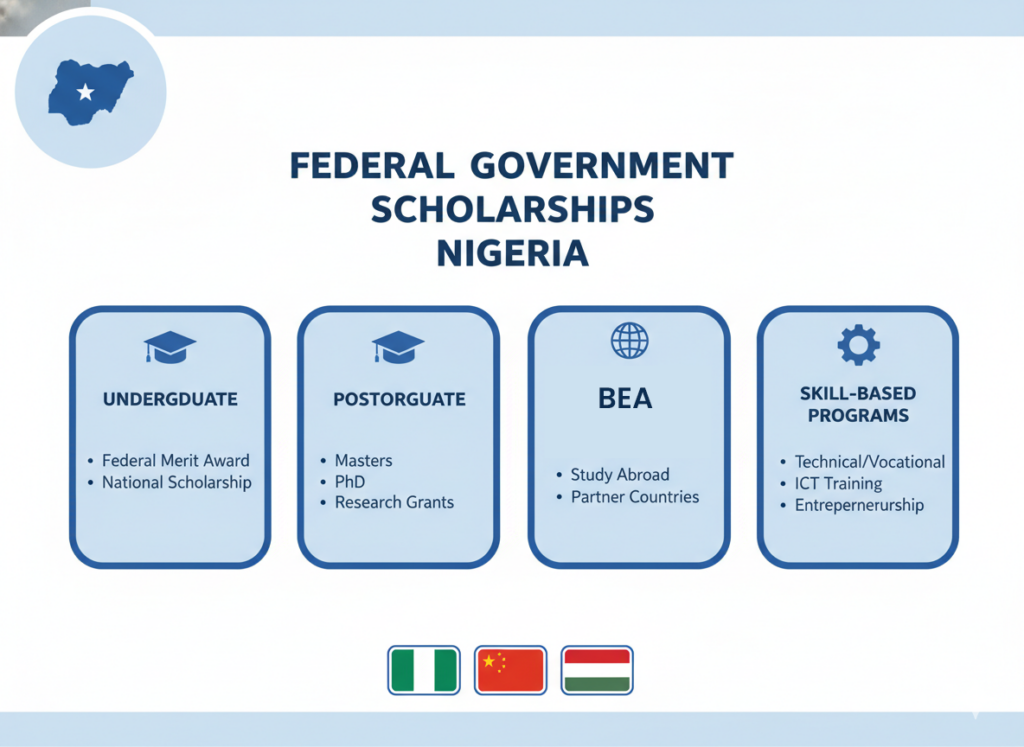
The Nigerian government offers several scholarships each year through different agencies. Understanding them helps you know which category fits your level and goals.
a. Undergraduate Scholarships
These are for students currently enrolled or newly admitted into universities, polytechnics, or colleges of education in Nigeria. Requirements usually include strong academic performance, a valid admission letter, and properly documented transcripts.
b. Postgraduate Scholarships (Master’s & PhD)
These scholarships support Nigerians pursuing postgraduate degrees locally or internationally. Applicants typically need a bachelor’s degree with at least a Second-Class Upper and a valid NYSC certificate.
c. Bilateral Education Agreement (BEA) Scholarships
These federal government scholarships send Nigerians to study abroad in partner countries such as:
- China
- Hungary
- Morocco
- Russia
- Algeria
The BEA category is one of the most competitive, requiring interviews, strong transcripts, and often language preparation.
d. Special Skill-Based Scholarships
These programs focus on high-demand fields like engineering, STEM, ICT, and teacher education. Some are supported by international organisations such as UNESCO and the Commonwealth Scholarship Commission.
For a deeper overview of federal support for online learners, EduTech Business has also covered similar topics in the blog “Federal Government Scholarships in Nigeria: Financial Aid for Online Learners” available on the EduTech Business blog page
Step-by-Step Guide: How to Apply for Federal Government Scholarships the Right Way
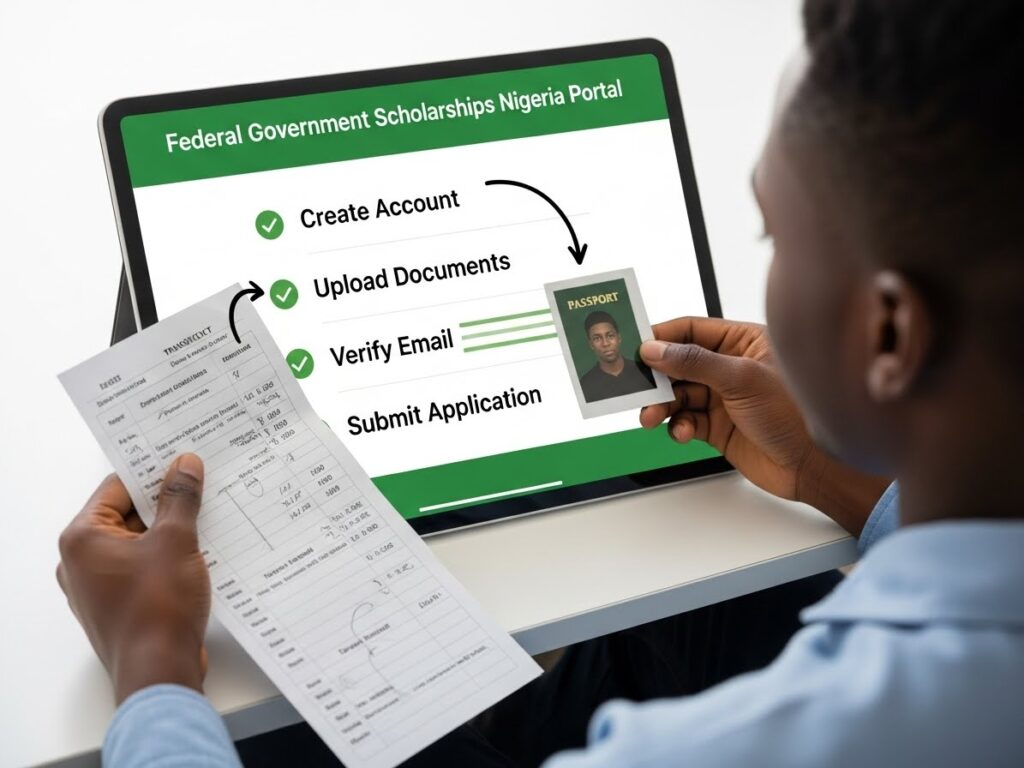
Applying correctly can make the difference between getting selected or losing your chance. Follow these steps carefully:
Step 1: Visit the Official Portal Only
Begin by visiting the verified Federal Scholarship Board portal.
Do not apply through social media pages or random blogs claiming to offer shortcuts.
Step 2: Create an Account
Register with a valid email address, correct name format (same as on your certificates), and your phone number. Many applicants lose opportunities because they enter incorrect details that cannot be verified.
Step 3: Upload Accurate Documents
Most scholarship Boards request:
- WAEC/NECO result
- Admission letter (for undergraduates)
- Degree certificate + NYSC (for postgraduates)
- Passport photograph
- Valid ID
Make sure documents are:
Clear
Properly scanned
Uploaded in the required file size
Step 4: Fill Out the Application Carefully
Common mistakes students make include:
Using nicknames not matching their certificates
Uploading blurred transcripts
Selecting the wrong scholarship category
Entering incorrect CGPA
Using fake documents
Avoid these errors to improve your chances significantly.
Step 5: Submit and Print Your Slip
After submitting your form, print your acknowledgement slip. It is often needed during verification or interviews.
Step 6: Prepare for Possible Interviews
The BEA scholarship usually includes oral interviews. Review current affairs, your field of study, and basic questions about Nigeria’s education policies.
For more tips like this, visit the EduTech Business Blog which covers application strategies and student support.
How to Improve Your Chances of Getting Selected
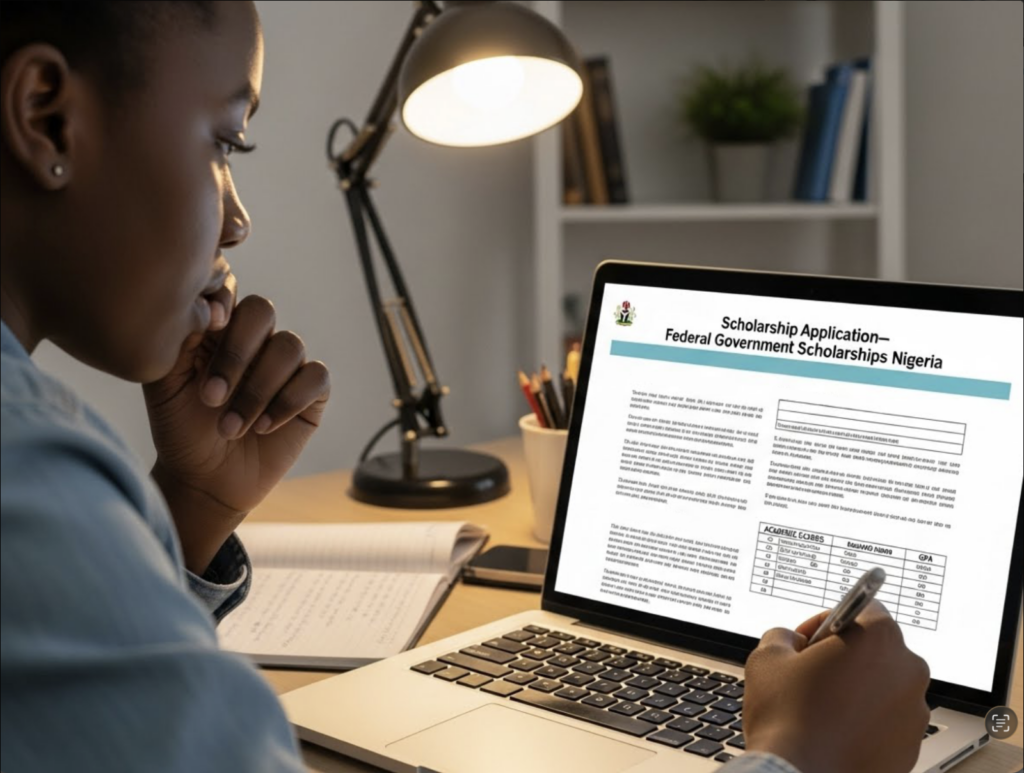
With thousands of applicants yearly, standing out is important. Here’s how to boost your chances when applying for federal government scholarships in Nigeria in 2026:
a. Maintain a Strong Academic Record
Federal scholarships heavily favour high-performing students. A good CGPA (3.5 and above for undergraduates; 2:1 for graduates) significantly increases your selection chances.
b. Showcase Leadership & Volunteer Work
Many scholarship committees look for:
- Community service
- NGO involvement
- Leadership roles
- Academic society participation
These experiences prove you’re ready to contribute to society after your studies.
c. Write Clean, Well-Organised Applications
Your application should be:
Error-free
Properly formatted
Consistent with your documents
Clear and concise
Formatting mistakes, wrong dates, or mismatched details often lead to automatic disqualification.
d. Apply Early
Scholarship portals often crash on deadline days. Applying early ensures your documents upload smoothly and your form is reviewed faster.
e. Follow Instructions Exactly
Each scholarship has unique requirements. Read guidelines on:
- Required documents
- Eligibility criteria
- Age limits
- File formats
This reduces avoidable mistakes.
For more guidance on preparing strong applications, you can also check the EduTech Business blog post “Federal Government Scholarships in Nigeria: Financial Aid for Online Learners” accessible via the blog page.
Scholarship Scams to Avoid in 2026
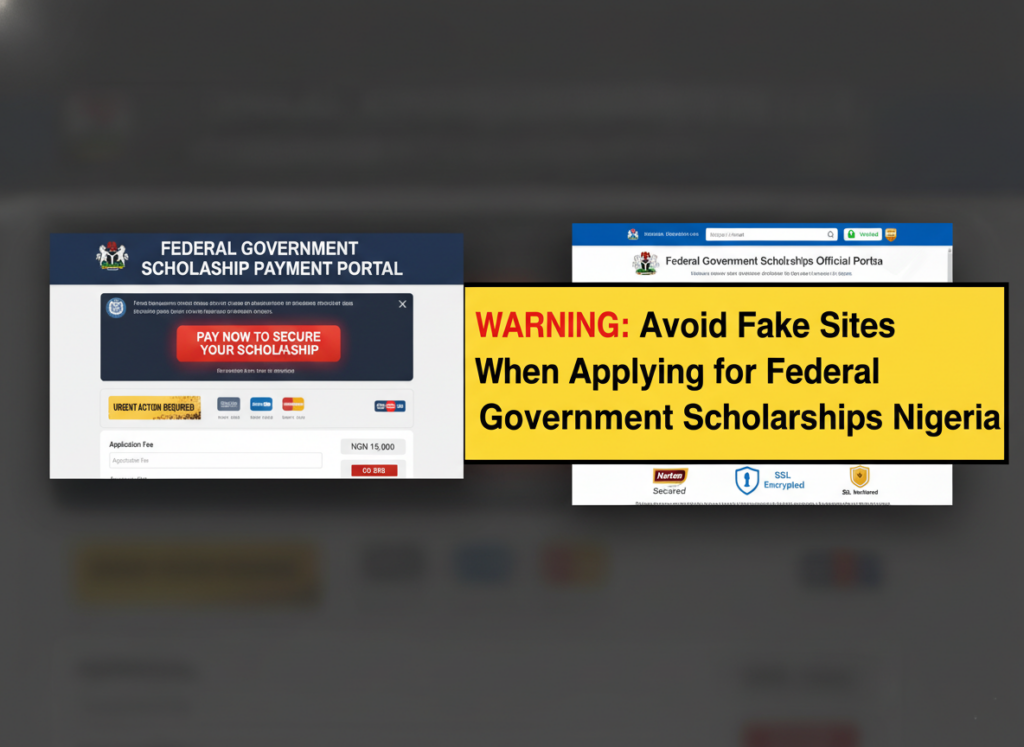
As scholarship demand grows, scammers are becoming more sophisticated. Protect yourself by knowing what to avoid:
a. Fake Websites Asking for Payment
Federal government scholarships do not require payment. Any site asking for:
“Registration fee”
“Processing fee”
“Portal access fee”
…is a scam.
b. WhatsApp or Telegram Groups Promising Guaranteed Slots
No individual can guarantee selection. Always cross-check information with:
c. Fake Agents
Avoid “agents” claiming they can help you bypass the process. The government reviews all applications strictly.
d. Social Media Impersonators
Always confirm announcements on official government sites and not on screenshots or broadcast messages.
When in doubt, EduTech Business provides verified information and guidance through its official website or if you need further help, you can always reach the EduTech team
Conclusion
Applying for federal government scholarships in Nigeria does not have to be complicated, you just need to follow the right steps and avoid common mistakes. Whether you are applying for undergraduate, postgraduate, BEA, or skill-based scholarships, accuracy, early preparation, and strong academic performance give you a major advantage.
As opportunities expand in 2026 and application portals become more digital, Nigerian students have more access than ever before. With the right preparation and guidance, especially through platforms like EduTech Business, you can confidently apply, stand out, and increase your chances of winning financial aid for your educational journey.
Written by Adebambo Fisher
Intern, Branding, Marketing & Communications


6 Responses
fatsumaabubakarusman3@gmail.com
Am interested
faithosas173@gmail.com
LAW
Application for laon on post graduate
My name is Andrew Ezekiel I completed my secondary school in GSS mubi and I need to apply for a scholarship My be God will help me.
I like to study at abroad