
Introduction: Why Student Emergency Funds in Nigeria Are Important
Life as a student often comes with financial pressure, and when unexpected challenges strike, the consequences can be severe. In Nigeria, many students face sudden emergencies such as health issues, family crises, accidents, or even loss of part-time income. These situations can disrupt their education, increase stress, and sometimes lead to dropping out of school altogether.
This is where student emergency funds in Nigeria play a crucial role. By offering quick and targeted support, these funds provide financial relief that allows students to continue their studies without interruption. For instance, a medical bill, rent issue, or urgent need for food assistance could make the difference between staying in school and abandoning education goals. Emergency funds are not just about money; they safeguard academic continuity and ensure that students don’t lose opportunities due to temporary hardships.
What Are Student Emergency Funds?
Student emergency funds in Nigeria are financial resources specifically designed to support students facing sudden financial hardship. Their primary purpose is to provide short-term relief, allowing students to manage unexpected expenses without compromising their education.
These funds can take several forms:
- Grants: Non-repayable financial aid given to students in need.
- Loans: Short-term, low-interest or interest-free loans provided by institutions.
- Institutional Aid: Direct support from universities or colleges, such as tuition fee waivers, bursaries, or emergency stipends.
For example, the University of Lagos (UNILAG) and Obafemi Awolowo University (OAU) have programs that assist students experiencing sudden hardship. Similarly, NGOs such as the Education Rights Campaign have stepped in to provide aid when government or institutional support was insufficient.
In short, these funds exist to help students overcome immediate crises and stay focused on their academic journey.
Types of Financial Support Services Available for Students

Apart from student emergency funds in Nigeria, universities, NGOs, and government bodies also provide a range of support services. Some common forms include:
- Hardship Grants: One-off financial assistance for students facing sudden crises like eviction or urgent medical expenses.
- Temporary Housing: Some universities provide hostel accommodations for displaced students.
- Food Assistance: Meal vouchers, food banks, or subsidized dining options for students who struggle with daily sustenance.
- Health Support: Coverage for urgent health bills or subsidized medical care within campus clinics.
- Emergency Bursaries: Short-term aid specifically targeted to cover tuition or academic-related expenses.
- Short-Term Loans: Quick-access funds that students repay within a set timeframe, often with low or no interest.
For instance, some private institutions have created “student hardship bursaries,” while NGOs and faith-based organizations frequently distribute emergency packages to support vulnerable students. These services demonstrate that financial aid for students extends beyond tuition fees; it covers every aspect of well-being.
How to Apply for Student Emergency Funds in Nigeria
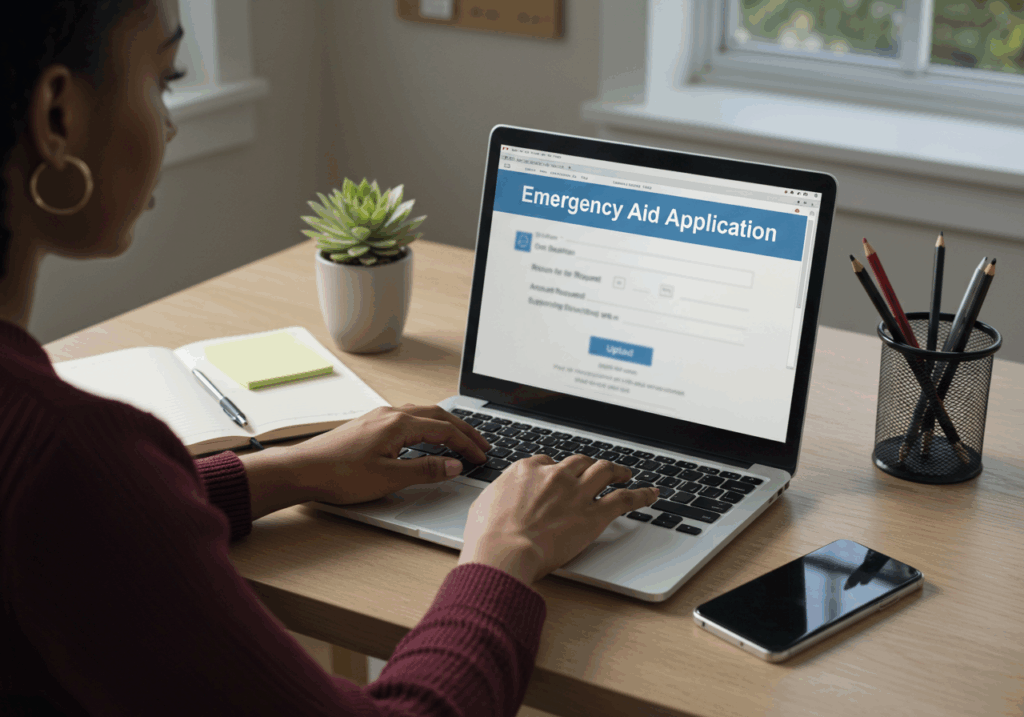
Applying for student emergency funds in Nigeria usually follows a straightforward process, but students must pay attention to requirements. Here is a step-by-step guide:
- Check Eligibility: Confirm that you qualify. Most funds are reserved for students enrolled full-time who can prove financial hardship.
- Prepare Documentation: Common requirements include a valid student ID, admission letter, proof of income (or lack thereof), and documents supporting the emergency (such as hospital bills or rent receipts).
- Submit an Application: Visit the financial aid office of your institution or the NGO’s official portal to fill out an application form.
- Write a Strong Application Letter: Clearly explain the situation, the urgency, and how the funds will be used. Avoid vague statements, be specific and concise.
- Await Review: Applications are usually reviewed within a short timeframe, depending on the urgency. Some universities have committees that assess requests weekly.
- Receive Aid: Once approved, aid may come in cash, vouchers, or direct payments to service providers (e.g., hospitals or landlords).
Tips for success:
- Be transparent about your needs.
- Provide supporting evidence.
- Apply early when you anticipate financial strain.
For students seeking scholarships abroad, you can also review our guide on How to Apply for International Scholarships: A Step-by-Step Guide.
Role of NGOs and Private Foundations in Providing Support

Non-governmental organizations and private foundations are vital contributors to student emergency funds in Nigeria. They fill gaps where government or institutional funding may be limited.
- NGOs: Organizations like the Education Rights Campaign and grassroots student associations provide emergency stipends and food relief.
- CSR Initiatives: Some corporate social responsibility (CSR) programs run by banks, telecoms, and oil companies include financial aid for students.
- International Non-Profits: Groups connected to global bodies such as UNESCO and UNICEF also channel resources into Nigerian education, offering bursaries and relief funds.
Successful models include student aid drives at Covenant University and community-based relief from NGOs in Lagos and Abuja. These programs prove that partnerships between universities and private foundations can significantly improve student welfare.
Building a Personal Emergency Fund as a student
While institutional support is essential, students should also try to build their own emergency buffer. Establishing a small savings culture can go a long way in preventing crises.
- Start Small: Save even ₦500–₦1,000 weekly. Over time, this grows into a reliable reserve.
- Use Budgeting Tools: Free apps or simple spreadsheets can help track spending and savings goals.
- Leverage Part-Time Income: Many students work part-time jobs or freelance online. Dedicating a portion of that income to a savings account creates financial stability.
- Avoid Unnecessary Debt: By setting aside small amounts, students reduce the risk of turning to high-interest loans.
Creating a personal emergency fund ensures that not all reliance is placed on external aid. It empowers students to handle minor financial shocks independently.
Where to Find Reliable Information on Student Support Programs

Finding accurate and trustworthy sources is critical when searching for student emergency funds in Nigeria. Many scams exist, and students must be cautious. Reliable sources include:
- University Websites: Most Nigerian universities have official financial aid pages detailing hardship support.
- Financial Aid Offices: Direct contact with bursary or student affairs offices provides clarity.
- Credible NGOs: Use verified portals such as the Nigeria NGO Directory.
- International Organizations: Institutions like the World Bank and UNICEF publish reliable resources.
Warning: Avoid websites or individuals requesting upfront “application fees” for hardship funds. Authentic student support programs rarely demand payment for processing.
For more funding insights, check our related post: Top Online Degree Programs in Nigeria Without JAMB (2025 Guide).
Conclusion
Student emergency funds in Nigeria are lifelines that help young people overcome sudden financial barriers. Whether provided by universities, NGOs, or private foundations, these funds ensure that education remains accessible during times of hardship. Beyond institutional aid, students can also build personal savings habits that prepare them for unexpected challenges.
Ultimately, financial aid for students is not just about providing money, it is about protecting futures. By staying informed, applying strategically, and seeking credible support services, students can safeguard their education and continue building toward their career goals.
Learn more about available opportunities and reach out to us via our Homepage or Contact Page for personalized guidance.
Written by Adebambo Fisher
Intern, Branding, Marketing & Communications



7 Responses
Subject: Urgent Assistance Needed for Master’s Program Fees
Trust you are doing excellently well.
I firstly want to commend your profoundness and indefatigable deportment in impacting people’s lives. May thy Lord continue to prosper you and enriched you in all your endeavors.
Perhaps, I am reaching out with a humble request for financial assistance to cover my school fees for my master’s degree program. The payment portal is closing soon, and I am in urgent need of support that is the reason why I am reaching out to you as a kind hearted personality you have always been.
Your generosity could make a significant difference in my academic journey. I am ready to provide any documents or further information to verify my situation.
May you be blessed abundantly for your kindness and support. Thank you for considering my request; it truly means a lot to me. As I anticipate to hear from you soon.
Warm regards,
Adedeji Tosin
+2347067250377
I’m a student am down financially and I really need money please 🙏🥺
Am a student of foreign links campus at ife i have exam on Monday and I never pay school fees my dad is stranded and he is thinking maybe my sister should drop out because of my education
So am thinking maybe I should drop
So I don’t know if u can help me
Helpful
Thanks
Hi,
Good work, keep it up.
I want to know if the grants are just available to the students in Nigeria only or its extended to Nigeria students abroad?
Thanks
Ade
I really need financial help
Am a student sponsoring myself in school
I really need help for my fees we just resume second semester I haven’t gone back to school I don’t have money
I believe God touches your heart to help me 😔🙏
Hello good afternoon please I need financial help I am a single mother of two I really desperate I need help depression is too much on me please if anybody can help me I will be glad I’ll be happy hour appreciate please I’m desperate help me please