
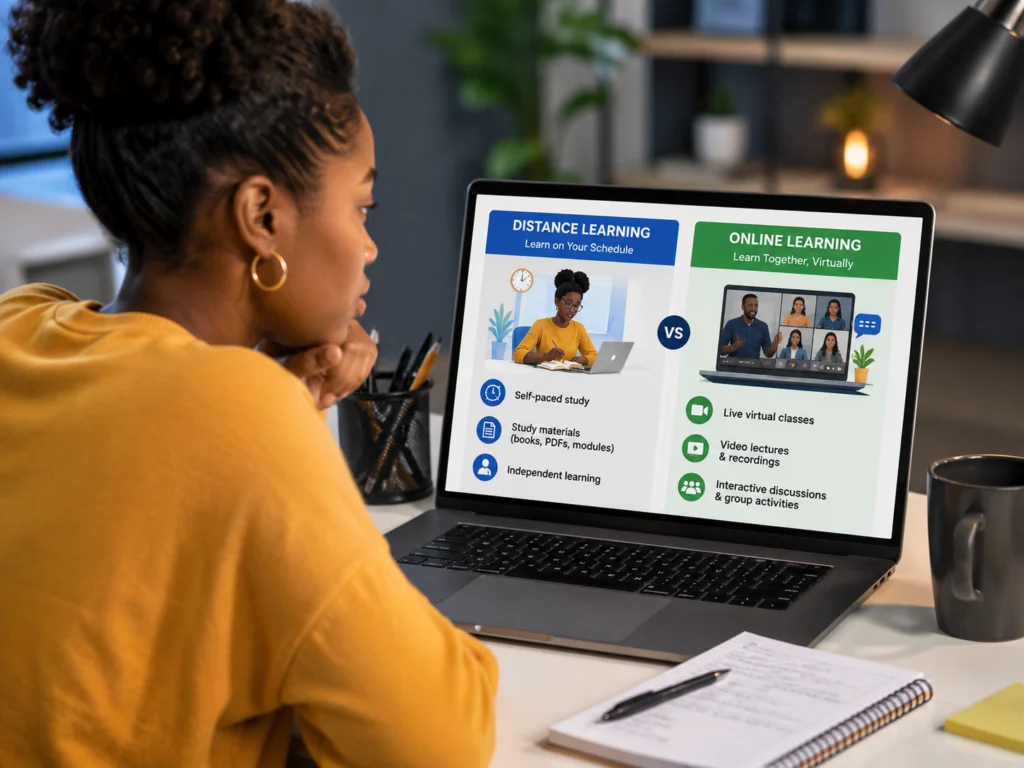
Distance learning is not simply a campus programme delivered through a screen. It is a different way of organising access, teaching and support around the learner.
For African universities and TVET institutions, that shift creates room to reach people who cannot relocate, pause work or travel to campus every day. But putting lectures online is only the beginning. A lasting model needs academic teams, reliable systems and a realistic plan for funding the work behind every course.
Start with the learner
Before choosing a platform, understand who the programme is for. A working professional, a learner in a low-connectivity area and a student developing practical skills may need very different learning experiences. Ask when they can study, which devices they use and where they will turn when they need help.
Those answers should shape course design. Offer materials that work on mobile, downloadable resources for interrupted connections and clear weekly expectations. Where practical assessment is essential, plan supervised sessions or local learning support from the outset. Flexibility should remove barriers without weakening academic standards.
Build the operating model, not just the course
A learner’s experience begins before the first lesson and continues beyond the final assessment. Admissions, onboarding, fee payments, teaching, examinations and records must work as one journey. When those responsibilities sit in disconnected teams, students are left to bridge the gaps themselves.
Map that journey with academic and administrative colleagues. Give every stage a named owner, a clear process and an escalation route. Equip lecturers to design for online delivery, and make technical and academic support easy to find. Good distance learning depends as much on the people running it as on the content students see.
Connect the technology around the journey
A learning management system is important, but it cannot carry the whole institution. Applications, student records, learning materials, assessment and communication need to connect. A joined-up platform gives staff a clearer view of the learner journey and reduces the need to enter the same information in several places.
Start with the tasks students and staff need to complete, then define the systems and integrations required. Build in accessibility, data protection and clear access permissions. Test on the devices and connections learners actually use. Reliability and usability matter more than a long list of features.
Plan for sustainable delivery
Distance learning has ongoing costs: course development, platform operations, learner support, recruitment and quality assurance. A launch budget that overlooks those commitments can leave an institution with a programme it cannot consistently support.
Build a phased delivery plan with transparent responsibilities and realistic cost assumptions. Consider how institutional resources, learner payment arrangements and appropriate financing can support continuity. The goal is not simply to open enrolment, but to keep delivering a credible experience across successive intakes.
Launch, learn and improve
Begin with a manageable group of programmes and define what readiness looks like before enrolment opens. Review course materials, test the admissions process and rehearse support scenarios. Invite students and lecturers to surface friction early, when it is easier to address.
After launch, use learner feedback and operational reviews to improve the next intake. Look beyond participation to ask whether students can access resources, receive timely feedback and find support. Scaling should follow a model that works, rather than amplify processes that do not.
At EABT, part of the EduTech Global ecosystem, we approach distance learning as connected infrastructure: people, platform and financing working together. For institutions ready to teach beyond their campus walls, the next step is to design that foundation with the learner at its centre.
EABT Editorial Team
Perspectives on the people, technology and partnerships expanding access to higher education in Africa and emerging markets.




THE CONVERSATION CONTINUES
Join the conversation.
Questions, experiences or a fresh perspective? We would love to hear from you.