Before the alarm goes off for most people, some of the most successful professionals in the world have already studied for an hour. It sounds extreme, and honestly, it is. This is not to say that you should torture yourself at dawn, nor is it hagiography dressed up as a productivity guide. It is an honest look at what a morning study routine before work actually involves, why the pre-work window is uniquely powerful, and how much of that you can realistically use without upending your life.
Most working professionals who want to build a new skill or finish a qualification are not short on ambition. They are short on hours. Evenings get swallowed by fatigue, family, and the accumulated weight of the day. What extreme learners have figured out is not superhuman discipline. It is that one window, before the working day begins, behaves differently to every other hour available to them.
Why the Morning Is a Uniquely Powerful Learning Window

There is genuine science behind why early mornings work so well for focused study, and it is worth understanding briefly before building a routine around it.
- Cortisol follows a circadian peak around waking. Research published via the National Institutes of Health confirms that cortisol, the hormone closely tied to alertness, rises sharply around the natural waking window as part of the body’s circadian rhythm, supporting heightened focus early in the day.
- Decision fatigue has not yet accumulated. A well-known study of judicial rulings found that favourable decisions were roughly 65 percent more likely at the start of a session and fell steadily as the morning wore on, only resetting after a break. The same principle applies to any task requiring sustained mental effort, including study.
- Interruptions are at their lowest point of the day. No emails, no meetings, no messages, before most of the world is awake.
- Willpower is typically strongest before the day depletes it. Every decision made across a day draws on a shared, finite reserve of self-control, and study benefits from being first in line rather than last.
The key insight is not that early morning is simply quiet, though it is. It is that early morning is neurologically well suited to new learning, before the demands of the day begin drawing down the same mental resources study requires.
What Extreme Learners Actually Do Before 7am
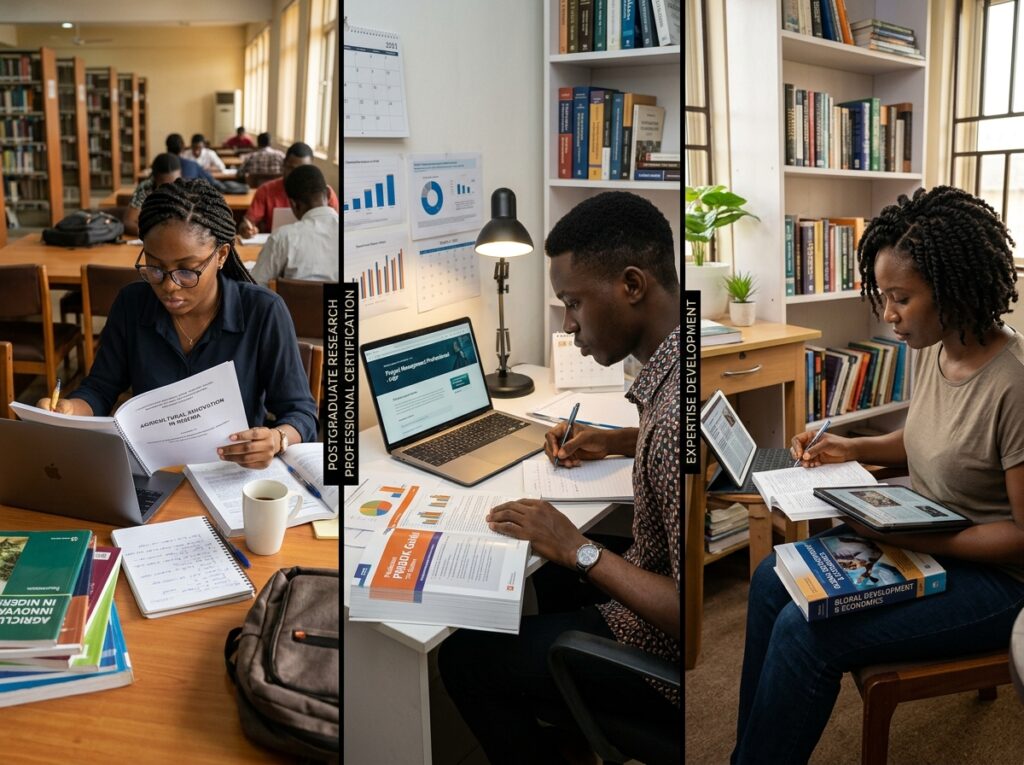
These are composites, not real individuals, but the patterns reflect how a genuine morning study routine before work tends to take shape once it sticks.
The credential builder studies for a postgraduate qualification one module at a time, two hours before the household wakes. It is unglamorous and repetitive, module after module, but eighteen months later, the qualification is complete, built entirely inside a window nobody else was using.
The skills stacker commits thirty minutes a day to a targeted certification: data analysis, a new language, a specific technical tool. Working in sixty to ninety day cycles, the short, consistent sessions accumulate into a completed programme faster than most people expect.
The strategic reader spends forty-five deliberate minutes reading within their field. Not news, not headlines, but books, research, and long-form analysis. Nothing dramatic happens in any single session, but over a year, it compounds into visible, recognisable expertise.
None of these are productivity robots. They are people who decided to use one quiet hour with intention, rather than leaving it to chance or scrolling.
The Morning Study Routine That Actually Sticks

A morning study routine before work fails most often because it starts too ambitious. The fix is a staged build.
- Weeks 1 to 2: start with twenty minutes, not an hour. The goal at this stage is removing intimidation and establishing consistency, nothing more.
- Weeks 3 to 4: once the habit holds, extend to thirty or forty minutes.
- Month 2 onward: build toward sixty to ninety minutes if your schedule genuinely allows it. This is where real progress accelerates.
Environmental setup matters as much as the schedule itself:
- Prepare materials the night before, so there is nothing to search for or decide upon at 5am.
- Eliminate decision fatigue at startup by knowing exactly what you are opening before you sit down.
- Keep news and social media off until study is finished. Both are engineered to consume the exact focus you are trying to protect.
- Single-task: one subject, one resource, one session. Switching between materials wastes the very clarity the morning provides.
What to Actually Study in the Morning, and What Not To

Not every kind of learning suits this window equally well.
Best suited to mornings: new concepts, focused reading, course modules requiring retention, writing, and problem-solving practice, all tasks that benefit from a clear, undepleted mind.
Less ideal for mornings: administrative tasks, group study, and live sessions, unless you are a genuine natural early riser, since these depend on other people’s schedules rather than your own uninterrupted focus.
Before sitting down, know precisely what you are studying and for how long. Thirty focused minutes of deliberate study will consistently outperform ninety minutes of distracted browsing through course material with a phone nearby.
The Honest Challenges, and How to Handle Them
No article about early study is credible without acknowledging what makes it genuinely difficult.
Sleep. You cannot consistently rise at 5am while going to bed at midnight. The evening routine matters just as much as the morning one, and an earlier bedtime is usually the real first step, not the alarm setting.
Family and household. A morning study routine before work requires negotiation and communication with the people you live with, not just a change to your alarm. This is a conversation, not a solo decision.
Motivation dips. The first two weeks are consistently the hardest part. Progress stays invisible for longer than feels fair, right up until it suddenly is not.
Skipped days. Missing one morning is not failure. What matters is the pattern across months, not the perfection of any single session.
How EduTech Business Makes Early Morning Study Worth It
A strong routine still needs the right programme behind it. EduTech Business connects morning learners with study formats genuinely built for busy schedules, including:
- fully online, self-paced programmes that fit around existing employment
- modular learning structured for thirty to sixty minute study windows
- accredited degree and certification pathways that do not require stepping away from work
Through partner institutions, that includes ABU DLC for a flexible online degree structure, Babcock BUCODEL for part-time postgraduate options, and Ingryd Academy for focused tech certifications delivered in manageable modules.
Frequently Asked Questions
Can I really study effectively before work in the morning? Yes. Circadian research shows alertness and focus tend to be strongest shortly after waking, before decision fatigue and interruptions accumulate across the day.
What is the best morning study routine for working professionals? A staged one: twenty minutes to build the habit, extending to thirty or forty once it holds, and sixty to ninety minutes only once the routine feels sustainable.
How long should I study before work each day? Start with twenty minutes. Consistency matters far more than duration in the early weeks of any morning study routine before work.
What subjects are best to study in the morning? New concepts, reading, retention-heavy course material, writing, and problem-solving all suit the morning window well.
How do I build a consistent morning learning habit? Prepare materials the night before, protect the session from phone distractions, and treat missed days as normal rather than as failure.
Is thirty minutes of study per day enough to make real progress? Yes, provided it is focused and consistent. Thirty deliberate minutes will outperform far longer sessions undermined by distraction.
Your Next Chapter Starts Before Everyone Else’s Day Does
You do not need more hours in the day. You need the right programme for the hours you already have. Explore flexible, self-paced degree and certification programmes with EduTech Business. Speak to an advisor and find a study format that works around your life, not against it.