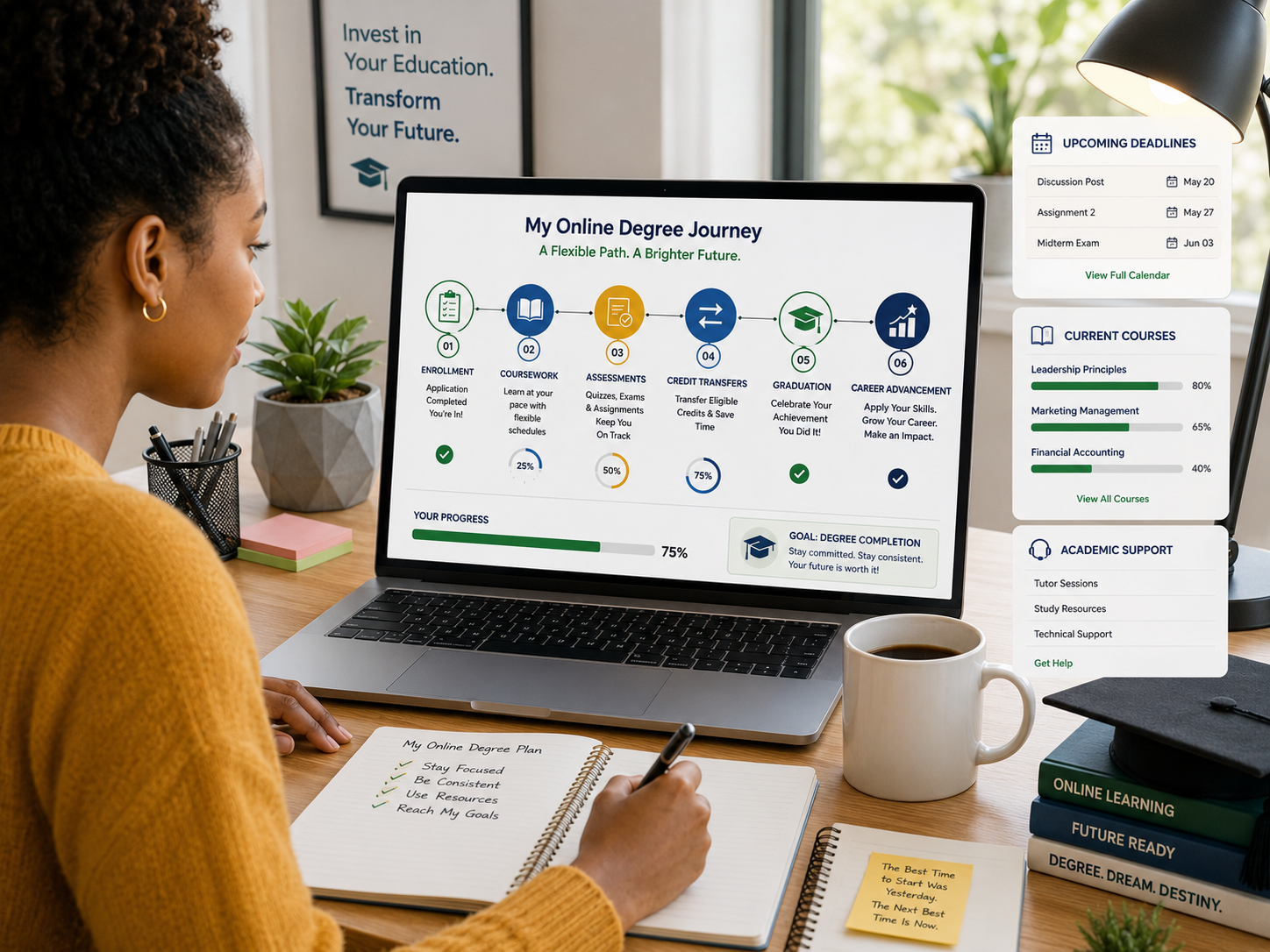
For many young professionals and university students, the question is no longer whether to continue learning, but how. Rising tuition costs, shifting job requirements, and the demand for continuous upskilling have made lifelong learning essential. It is no surprise that more people are asking whether they can realistically study while working without compromising their performance or well-being.
This shift is backed by data. According to the World Economic Forum, nearly half of all workers will need reskilling by 2025 due to rapid technological change, highlighting the urgency of continuous education. At the same time, platforms like Coursera reported over 136 million registered learners globally in 2023, driven largely by professionals seeking flexible education. The opportunity to combine work and study has never been more accessible, but making it work requires intention.
Read More: How to Choose the Right Career Before Choosing a Degree
Can You Really Study While Working?

The short answer is yes, you can study while working. However, success depends on structure, discipline, and the right learning model.
Flexible education has transformed what is possible. Universities and global platforms now offer online and hybrid programmes designed for working adults. Listings and programme data from QS Top Universities show a growing number of part-time and distance-learning degrees tailored to professionals.
What this means is that studying while working full-time is a deliberate choice made by professionals who want to grow without stepping away from their income. The real challenge lies not in access, but in execution.
Is It Possible to Balance Work and Study?

Maintaining a sustainable work and study balance is possible, but it requires realistic expectations.
Balance is not static. Some weeks, work will demand more attention; in others, academic deadlines will take priority. Understanding this ebb and flow is key to avoiding frustration.
Flexibility is often the deciding factor. Many learners succeed because they choose part-time study options or asynchronous courses that allow them to study at their own pace. According to research published by the National Centre for Education Statistics, a significant proportion of part-time students are employed while studying, reflecting how common this model has become.
However, balancing both roles is not without pressure. Long work hours followed by study sessions can lead to fatigue, making it essential to build a routine that is both realistic and sustainable.
Benefits of Studying While Working
Choosing to study while working offers several meaningful advantages.
One of the most important is the ability to apply knowledge immediately. Learning becomes more practical when concepts can be tested in real work environments.
There is also strong evidence linking continued education to career advancement. Data from the OECD shows that higher levels of education are associated with better employment outcomes and earnings potential.
Financial stability is another key benefit. By earning while studying, individuals avoid the full financial burden of traditional full-time education.
Beyond these, studying while working full-time builds discipline, adaptability, and time management skills, all of which are critical in today’s workplace.
Read More: Distance Learning in Nigeria: Who Should Choose It and Who Should Avoid It
Challenges Students Face

Despite its benefits, studying while working full-time presents real challenges.
Time constraints are often the most immediate issue. A full-time job already demands energy and focus, leaving limited room for academic work.
Burnout is another concern. According to the World Health Organisation, burnout is linked to chronic workplace stress that has not been successfully managed. Adding academic pressure can intensify this risk.
Consistency can also be difficult to maintain. Irregular schedules and unexpected work demands can disrupt study routines, making progress uneven.
Understanding these challenges is essential. They are not barriers, but realities that must be managed deliberately.
Practical Tips to Manage Work and Study
To successfully study while working, you need a system that supports consistency and reduces overwhelm:

- Create a fixed weekly schedule: Block out dedicated study time and treat it as non-negotiable
- Plan tasks in advance: Break assignments into smaller tasks and map them across the week
- Use weekends effectively: Reserve longer sessions for deeper focus and complex work
- Choose flexible programmes: Opt for online or modular courses that fit around your job
- Limit additional commitments: Avoid overloading your schedule with unnecessary obligations
These strategies are simple but powerful. The goal is not perfection, but steady, sustainable progress.
Best Study Options for Working Professionals
Your choice of programme can determine how successfully you study while working.
Online degree programmes offer the highest level of flexibility, allowing you to access lectures and materials at any time. Many institutions now design these specifically for working adults.
Evening and weekend classes provide a more structured approach, which can be helpful for those who prefer routine.
For maximum adaptability, part-time study options and self-paced courses remain the most practical. Platforms like Coursera enable learners to progress at their own speed, making it easier to adjust to changing work demands.
Ultimately, flexibility is not just helpful; it is essential.
Read More: Internships with Stipends: How to Gain Experience and Earn While Studying
Common Mistakes to Avoid
When trying to study while working, avoiding these common pitfalls can make a significant difference:
- Choosing rigid programmes that do not accommodate work schedules
- Ignoring rest and recovery, leading to burnout and reduced productivity
- Poor time planning, resulting in missed deadlines and accumulated stress
- Lack of communication with employers can create unnecessary conflict
Recognising these early allows you to build a healthier and more effective work and study balance.
How EduTech Business Supports Working Students
For professionals navigating the demands of studying while working full-time, having access to reliable guidance is crucial.
EduTech Business provides a platform for exploring flexible education pathways and understanding how modern learning models fit into professional life. Through its blog, readers can access insights on trends, programme options, and strategies for managing both work and study.
The platform also helps learners make informed decisions about course selection and career alignment. For personalised support, prospective students can reach out via the contact page.