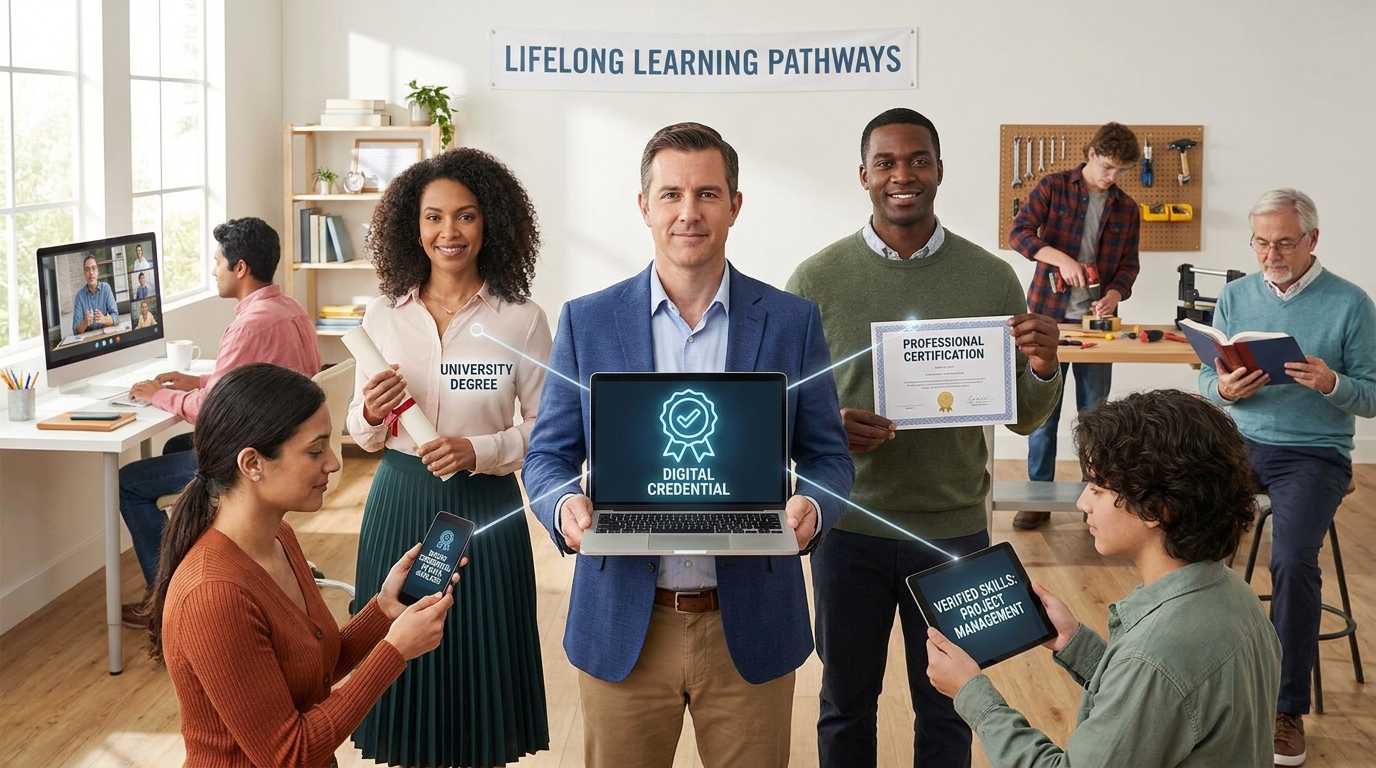
A few years ago, listing an online degree on a CV felt like a gamble. Would the recruiter take it seriously? Would the hiring manager quietly discount it? Those questions haunted graduates who had worked hard for their qualifications but worried the format would overshadow the substance. In 2026, the landscape looks meaningfully different. The conversation has shifted, the data has caught up, and millions of graduates worldwide are entering the workforce with online credentials from accredited institutions and finding real career traction. Yet the picture is not entirely straightforward. Online degree value varies depending on where the degree comes from, what industry you are entering, and how you present yourself as a candidate.
Understanding how employers think about this now, rather than relying on assumptions from five years ago, is one of the most practical things any student or prospective graduate can do. The goal of this article is to give you that honest, grounded picture: what has genuinely changed, where the questions remain, and what concrete steps you can take to maximise the value of online education in your own career.
Read More: Can You Work and Study Online at the Same Time?
What Determines Online Degree Value Today

The single most important factor in online degree value is not the mode of study. It is accreditation and institutional reputation. An online degree from a recognised, accredited university carries genuine weight with employers. One from an unverified institution, regardless of how it was delivered, does not.
A 2024 NACE report found that 87.4% of employers who track degree modality have hired graduates with online degrees, which is a significant figure. It confirms that online degree acceptance by employers is now a measurable reality, not a hope. But employers are not neutral on all online degrees equally. They are positive about online degrees from institutions they recognise and trust, and sceptical about those from places they have never heard of or cannot verify.
Beyond the institution, three additional factors shape online degree value in the eyes of a recruiter:
- Skills and demonstrable outcomes: What can you actually do? Employers are increasingly interested in this question regardless of how you learned.
- Industry relevance of the programme: A qualification closely aligned with the role being advertised will always carry more weight than a generic one.
- Practical experience gained alongside the degree: Internships, projects, freelance work, and certifications all add tangible credibility to an academic qualification.
Read More: Is an Online MBA Worth It in Nigeria?
How Employers View Online Degrees in 2026

The context matters enormously here. According to the 2024 GMAC Corporate Recruiters Survey of more than 900 hiring professionals across 38 countries, 54% of employers view online and in-person degrees as equally valuable. That proportion is growing, particularly in the technology sector and in North America, where employers are most open to the idea that online programmes do not impart weaker technical skills than campus-based ones.
Simultaneously, nearly two-thirds of employers now use skills-based hiring practices, according to NACE’s Job Outlook 2025 survey. That is the most important context for understanding whether online degrees are respected in today’s market. Recruiters are actively moving away from asking where you learned toward asking what you can do and what you have produced. McKinsey research found that hiring for skills is five times more predictive of job performance than hiring based on education alone, which reframes the entire debate about degree format.
This does not mean credentials are irrelevant. It means they are evaluated alongside evidence of capability. An online degree from a respected institution, paired with strong practical skills and relevant experience, is a genuinely competitive application package in most sectors today.
Industries Where Online Degrees Are Widely Accepted

The value of online education varies by sector, and knowing where online degree acceptance by employers is strongest helps students make strategic choices.
Technology is the clearest example. 78% of tech companies have implemented skills-based hiring for technical roles, and major employers, including Google, IBM, and Apple, have dropped degree requirements for many positions. In this environment, an online degree that is paired with a strong portfolio, contributions to GitHub, or relevant certifications is fully competitive. By 2030, LinkedIn projects that over 75% of entry-level tech roles will prioritise skills over degrees, a trajectory already well underway.
Business and management is another area of strong acceptance, particularly at the postgraduate level. GMAC data shows MBA graduates in the US start at a median salary of $120,000 regardless of whether their programme was online or in-person. The credential carries weight; the delivery format carries far less weight than it once did.
Digital marketing, data analysis, and creative roles are similarly receptive. These fields judge candidates on demonstrable output: campaign results, analytical models, case studies, and design portfolios. An online degree that helped build those capabilities is valued because the capabilities themselves are what employers are hiring for.
Read More: Online Degree Myths That Stop Students From Applying
Where Online Degrees May Still Be Questioned

Honest guidance requires acknowledging that online degrees are respected, as a question still has a nuanced answer.
In highly regulated professions such as medicine, law, pharmacy, and engineering, professional bodies define accreditation requirements that often specify the mode of delivery. Online degrees in these fields may carry additional scrutiny or may not fulfil licensing requirements depending on the country and the relevant regulatory body. Always verify with that professional body before enrolling in any programme, and do not rely solely on the institution’s own marketing claims.
In conservative or traditional sectors such as certain areas of finance, academia, and government, preferences for established institutions and conventional qualifications can persist. The GMAC survey noted that Western European employers showed a statistically significant increase in preference for in-person programmes in 2024, a reminder that geography and industry culture still shape perceptions.
And in any sector, a degree from an unknown, unaccredited institution remains a problem. Institutional reputation is not optional; it is foundational to online degree value.
How Students Can Increase Their Career Chances
The good news is that the factors within your control are significant. Here is what genuinely makes a difference:
- Choose an accredited, recognised institution. Verify accreditation before enrolling. Resources like QS Top Universities help you identify programmes with credible international standing.
- Build practical skills alongside your degree. Complete short professional certifications through platforms like Coursera, which partners with leading universities and employers to provide credentials that carry genuine industry recognition.
- Pursue real experience. Internships, volunteer projects, freelance work, and personal initiatives all demonstrate that you can apply what you have learned. Nearly 90% of employers say they avoid hiring recent graduates who lack real-world experience, which underscores how critical this is.
- Document your work publicly. GitHub profiles, case studies, design portfolios, and data projects make your capabilities visible before an interview begins.
- Network actively. Many graduate roles are filled through connections made before the vacancy is ever publicly advertised. Online study communities, LinkedIn, and industry events all count.
Read More: Your Guide to Online Master’s Degrees: Benefits, Options, and Choosing the Right Program
Common Mistakes That Undermine Online Degree Value
Even well-intentioned students make avoidable errors that limit their career prospects:
- Choosing institutions based on low fees or quick completion without checking accreditation. This is the most damaging mistake, and it cannot be undone after graduation.
- Treating the degree as the finish line. A qualification with no practical experience, portfolio, or professional network is a starting point, not a complete application package.
- Skipping internships and work placements. These provide the real-world evidence employers most want to see.
- Ignoring professional certifications. In fast-moving fields, a relevant industry certification can add more immediate credibility than the degree itself.
How EduTech Business Helps Students Choose the Right Path
This is exactly where informed guidance matters. At EduTech Business, we work with students to identify accredited, career-aligned programmes from recognised institutions, helping them understand what employers in their target sector will be looking for and how to build a profile that reflects genuine online degree value.
We provide advice on programme selection, guidance on building the practical experience and certifications that strengthen applications, and personalised support throughout the admission process. Our goal is to ensure that every student who invests in online education does so through a pathway that is recognised, respected, and aligned with their career ambitions.
Explore our resources and blog or contact our advisory team to get guidance that is specific to your goals, not generic reassurance.