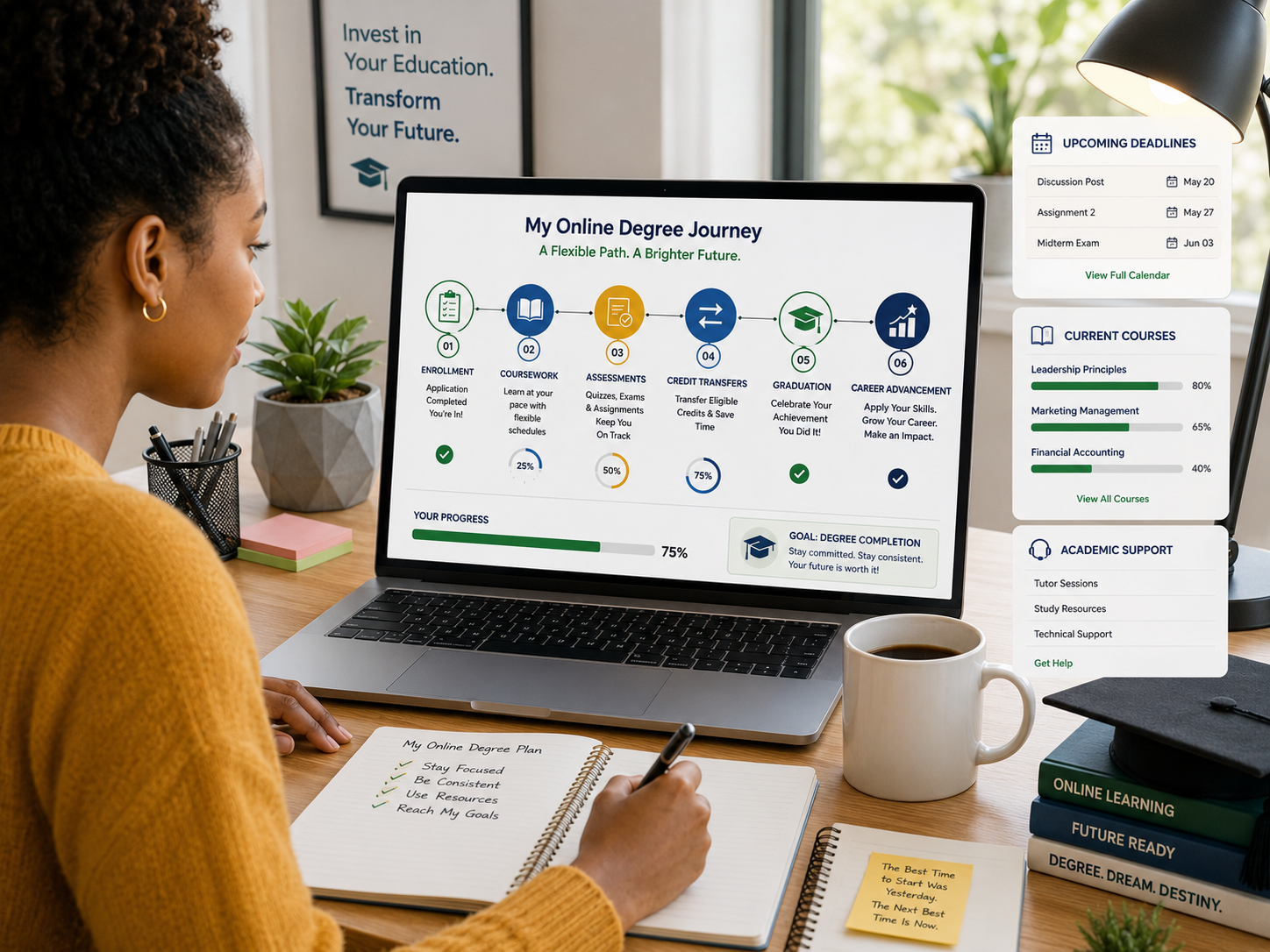
Your exam is in 24 hours. Your laptop is at 15 percent. Your Wi-Fi is acting up. Your notes are scattered across five tabs. Sound familiar?
Online university exam preparation is no longer optional. It is a survival skill for students navigating digital learning. As universities worldwide adopt virtual classrooms, online university assessment formats have become the new normal. Yet, many students still approach them like traditional exams and end up overwhelmed.
Unlike physical exams where you sit in a hall with invigilators and paper scripts, online exams demand more. You must manage your time, your environment, your technology, and your mental focus all at once. That pressure can create anxiety, self-doubt, and even the temptation to cut corners.
But here’s the truth: online exams are not harder. They are different. And with the right online exam tips, you can perform even better than you would in a physical exam hall.
In this guide, you will learn how to prepare for online exams effectively, avoid common mistakes, and approach your next online university assessment with confidence and control.
How Online University Exams Preparation Is Different From Physical Exams

Understanding the difference between online and traditional exams is the first step toward success. Online university exam preparation requires adapting to a new set of rules and expectations.
Open-Book Does Not Mean Easy
Many online exams are open-book, which tricks students into underestimating them. Instead of testing memory, these exams test understanding, analysis, and application.
If you spend the exam searching for answers in your notes, you will run out of time. Proper online university exam preparation ensures you already understand the material and only use your notes for quick reference.
Proctoring Software Is Watching
Some institutions use remote proctoring tools that monitor your screen, webcam, and browser activity. Looking away too often, switching tabs, or having someone enter the room can raise flags.
Knowing the rules ahead of time reduces stress and prevents unnecessary penalties.
Technology Becomes Part of the Exam
In physical exams, your biggest worry might be forgetting a pen. In online exams, your device, internet connection, software updates, and browser compatibility all matter.
A student who studies well but ignores technical readiness risks losing everything to a preventable glitch.
Your Environment Can Help or Hurt You
Online exams often happen at home, where distractions are everywhere. Notifications, background noise, or family interruptions can break concentration.
Creating a quiet, controlled space is a critical part of online university exams preparation.
Best Strategy for Online University Exams Preparation

If you’ve ever wondered how to prepare for online exams without feeling overwhelmed, the answer lies in structure and consistency.
Build a Study Plan That Works for You
Cramming the night before rarely works. Instead, break your syllabus into manageable sections and assign them to specific days. A realistic study plan reduces anxiety and improves retention.
Use Mock Tests to Simulate Real Conditions
Mock exams are one of the most effective online exam tips. They help you practice under timed conditions and become familiar with the exam format.
You learn how long to spend on each question and how to navigate the platform efficiently.
Summarize Instead of Rewriting Notes
Rewriting notes wastes time. Instead, create summaries using bullet points, flashcards, or mind maps. These formats make revision faster and more effective.
Practice With a Timer
Time pressure is one of the biggest challenges in online university assessment formats. Practicing with a timer trains your brain to work efficiently and stay focused.
Study Actively, Not Passively
Reading notes repeatedly is not enough. Test yourself, teach concepts to a friend, or solve practice questions. Active learning improves understanding and memory.
Common Mistakes Students Make During Online Exams
Even smart students fail when they ignore critical online exam tips. Avoid these mistakes to improve your performance.
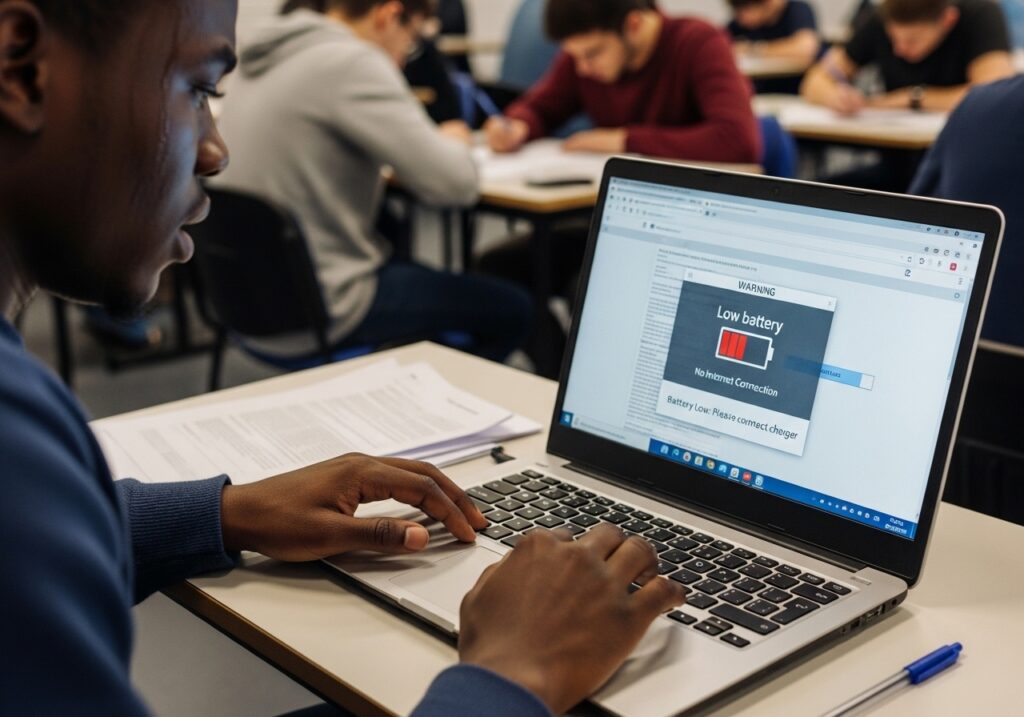
Relying on One Internet Source
Imagine losing connection halfway through your exam. Without backup data or an alternative network, you risk missing submission deadlines.
Always prepare a backup connection.
Waiting Until Exam Day to Test Your Device
A faulty webcam or incompatible browser can prevent you from accessing the exam. Test everything at least a day before.
Assuming Open-Book Means No Preparation
Students who rely on notes during the exam often run out of time. Understanding the material beforehand is essential.
Ignoring Exam Instructions
Every online university assessment has specific guidelines. File formats, submission methods, and time limits vary. Ignoring them can cost you marks.
Studying in a Distracting Environment
Trying to write an exam while notifications pop up or people interrupt you reduces focus and increases errors.
Tools That Improve Online University Assessment Performance

The right tools can transform your online university exam preparation from stressful to structured.
- Flashcard apps improve memory through spaced repetition
- Practice quiz platforms help identify weak areas
- Focus timers encourage productive study sessions
- Cloud storage prevents loss of important notes
- Backup internet options ensure uninterrupted exams
These tools not only improve exam performance but also build long-term learning habits.
Are Online Exams Harder Than Physical Exams?
This question comes up often. The answer depends on preparation, not format.
Online exams can feel harder because they require self-discipline, technical readiness, and time management. However, they also offer advantages:
- Flexible environments
- Immediate submissions
- Access to digital resources
- Reduced travel stress
Students who master online university exams preparation often find online exams more convenient and manageable.
How Can You Pass Online Assessments Without Cheating?
The pressure to perform can tempt some students to look for shortcuts. However, academic dishonesty carries serious consequences.
Here’s how to succeed honestly:
- Start preparing early
- Practice with mock exams
- Manage your time effectively
- Understand exam rules
- Stay calm and focused
Confidence comes from preparation, not shortcuts.
How EduTech Business Supports Students Before Exams
Preparing for exams alone can feel overwhelming, especially for students new to online learning. This is where EduTech Business plays a crucial role.
Academic Guidance
Students receive clarity on course structures, grading systems, and assessment formats, reducing uncertainty.
Study Planning Support
Personalized study plans help students balance coursework, revision, and deadlines.
Students can explore helpful resources and insights here. Do you need guidance or assistance? Reach out here
With the right support system, online university exams preparation becomes less stressful and more strategic.
Final Thoughts: Prepare Smart, Not Just Hard
Online university exams preparation is more than studying. It is about planning, practicing, and creating the right environment for success.
The students who perform best are not always the smartest. They are the most prepared.
So before your next exam, ask yourself:
- Is my technology ready?
- Do I understand the format?
- Have I practiced under timed conditions?
- Do I have a backup plan?
If the answer is yes, you are already ahead.
Online exams are not something to fear. They are an opportunity to prove your adaptability, discipline, and resilience in a digital world.
And those are skills that will serve you far beyond the classroom.
Written by Adebambo Fisher
Marketing & Communications Executive