
The Rise of Online Degrees in Nigeria
Online education has grown rapidly across Nigeria in recent years. What started as a flexible option for a few professionals has expanded into a nationwide solution for thousands of students. Today, working professionals seek career growth without quitting their jobs. Many young graduates search for affordable degree options that allow them to learn at their own pace. Remote learning has also expanded into rural regions where physical university access was once limited.
One major factor fueling this growth is mobile data access. With smartphones and affordable internet plans, daily online study habits are now common. Students attend live classes, submit assignments, and collaborate with classmates from their homes, offices, or even while commuting. This digital shift has made higher education more accessible than ever.
However, this fast growth has also attracted fraudsters. As more students search for opportunities online, the number of fake platforms continues to rise. This reality makes it more important than ever for students to learn how to identify genuine online degree providers in Nigeria before applying.
Why Fake Online Universities Exist

The demand for online education is high, especially among students who want flexibility, affordability, and speed. Unfortunately, where demand is high, fraud often follows. High demand creates space for fraud networks that set up fake university websites and social media pages to deceive unsuspecting students.
Social media ads now reach thousands of students daily with little or no verification checks. Some of these advertisements promise instant admission, very cheap fees, and fast certificates. These fast certificate promises often trick low income applicants who are desperate for a quick academic breakthrough.
Another reason fake platforms continue to thrive is urgency. Many students skip regulatory checks because they feel pressured by time, age, or job requirements. In their rush to secure admission, they fail to verify whether the institution is approved or even real. This emotional pressure makes many students vulnerable to scams.
Understanding why fake online universities exist helps students stay alert and approach every online admission opportunity with careful investigation.
Key Checks to Identify Genuine Online Degree Providers
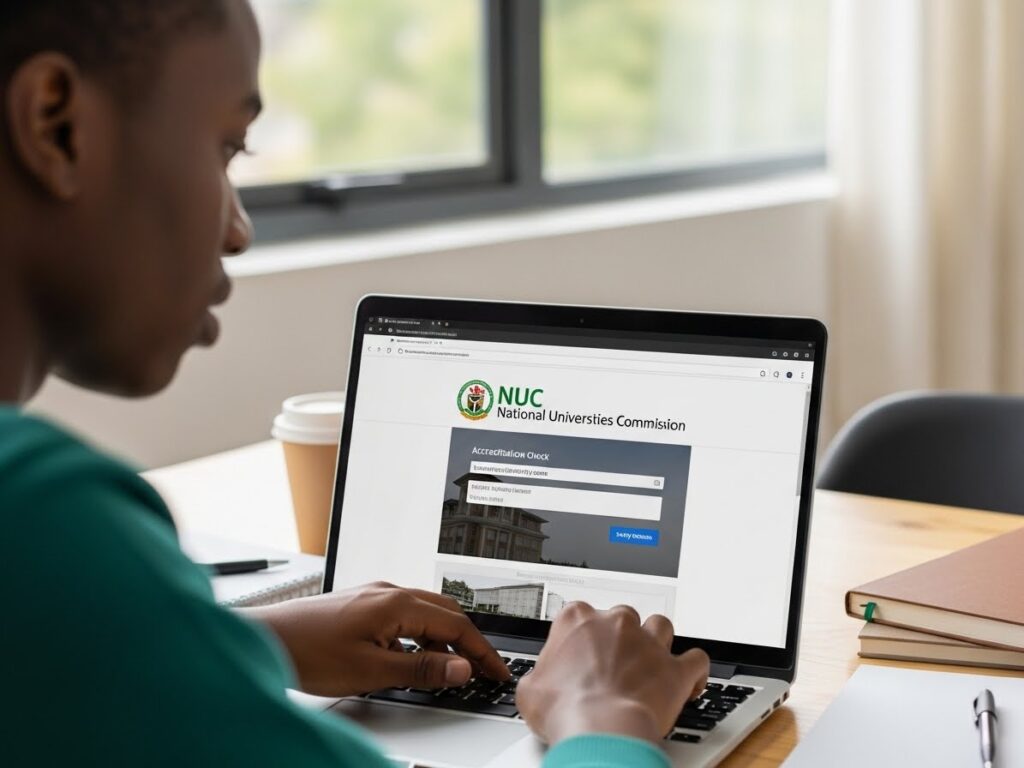
There are several important checks every student must carry out before enrolling in any online degree program. These checks help you confirm whether you are dealing with genuine online degree providers in Nigeria.
First, NUC approval is critical. The National Universities Commission regulates all legitimate universities in Nigeria. Any school offering online degrees must be approved by the NUC to operate and issue valid certificates. Without NUC approval, the certificate may not be recognized for employment or further education.
Second, a physical campus matters. Even if a school runs online programs, it must still operate a real physical campus. This confirms real administrative control and accountability. A genuine institution will always list a verifiable campus address that students can visit if needed.
Third, an official domain is essential. Genuine universities use secured communication channels with official institutional domains. Emails, portals, and websites must reflect the school identity. Random free email addresses are often a red flag.
Finally, structured admission steps show regulation. Genuine schools follow a clear admission process that includes application forms, document verification, fee payment through official channels, and acceptance letters. Any platform that skips these steps and promises instant admission should raise concern.
Difference Between Approved Distance Learning and Fake Platforms
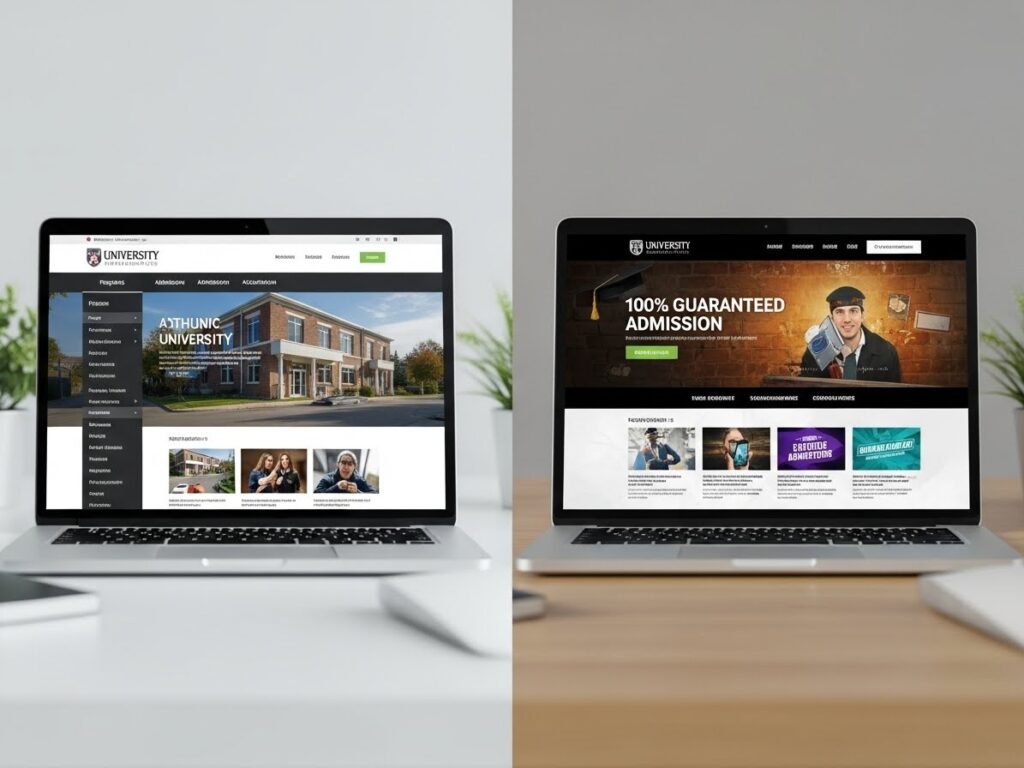
Approved distance learning institutions follow strict academic systems. They issue verifiable student identification cards that allow students to access learning portals, examination halls, and student services. These IDs can be confirmed within official databases.
Fake platforms, on the other hand, often offer downloadable PDF certificates without any academic trail. There is no student record, no verifiable identity, and no institutional history tied to the certificate.
Accredited exams follow fixed academic calendars. Students know when lectures begin, when exams hold, and when results will be released. These schedules follow national academic guidelines.
Fraud portals avoid result audits and transcript access. Once you finish a fake program, there is no way to request an official transcript for job verification or postgraduate studies. This is one of the biggest dangers of fake online degrees.
Understanding this difference protects students from wasting years on programs that will not support their career goals.
Verified Online Learning Universities in Nigeria

Several universities in Nigeria currently offer regulated online and distance learning programs within approved academic frameworks. One of the most recognized is the National Open University of Nigeria which operates study centers across the country.
Another trusted institution is Ahmadu Bello University Distance Learning Centre. ABU offers regulated online programs with proper admission processes, examinations, and certificate issuance.
Babcock University also applies blended online delivery for selected programs. As a reputable private institution, Babcock maintains clear admission procedures and academic standards. Students can visit for official information.
All three institutions operate under regulated academic frameworks and remain among the most trusted genuine online degree providers in Nigeria.
Final Checklist Before You Apply
Before you submit any application, always confirm the NUC distance learning status of the institution. This single step protects you from enrolling in an unrecognized program.
Next, validate the domain and email structure. The website and email communication must match the name of the institution. Avoid platforms that communicate through informal or suspicious addresses.
Review the exam process and timetable. Genuine institutions publish academic calendars clearly showing lecture schedules and examination periods.
Confirm the student identification system. Every approved student must receive a verifiable student ID linked to the institution database.
Finally, verify the fee payment channel ownership. All payments must go through the official school account or approved payment platform. Third party personal accounts are a strong warning sign.
Conclusion
Online learning is no longer a future concept in Nigeria. It is now a powerful tool for education access, career growth, and national development. However, the rise of fake institutions makes it necessary for students to stay informed and cautious. By following the steps outlined in this guide, students can confidently identify genuine online degree providers in Nigeria and avoid falling into costly traps.
For guidance on legitimate applications, verified program options, and proper admission support, students can explore EduTech Business or visit the resource hub . For direct guidance and application help, students may also contact us.
Written by Adebambo Fisher
Intern, Branding, Marketing & Communications



One Response
So enlightened