Artificial Intelligence (AI) is no longer a futuristic concept reserved for tech giants, it has become one of the most powerful forces shaping how people teach, learn, and succeed academically. Today, AI in education is helping universities deliver personalized learning, automate administrative tasks, identify struggling students early, and ultimately improve global student outcomes. As higher education evolves, AI is now a core driver of innovation, enabling institutions to scale quality learning more efficiently than ever.
For Nigeria and other emerging markets, the rise of AI in education represents an opportunity to bridge learning gaps, improve student retention, and create more inclusive academic experiences for millions of learners. EduTech Business is at the forefront of helping African institutions adopt these tools responsibly, ensuring that technology enhances not replaces the human element in learning.
AI in Education: From Personalization to Prediction
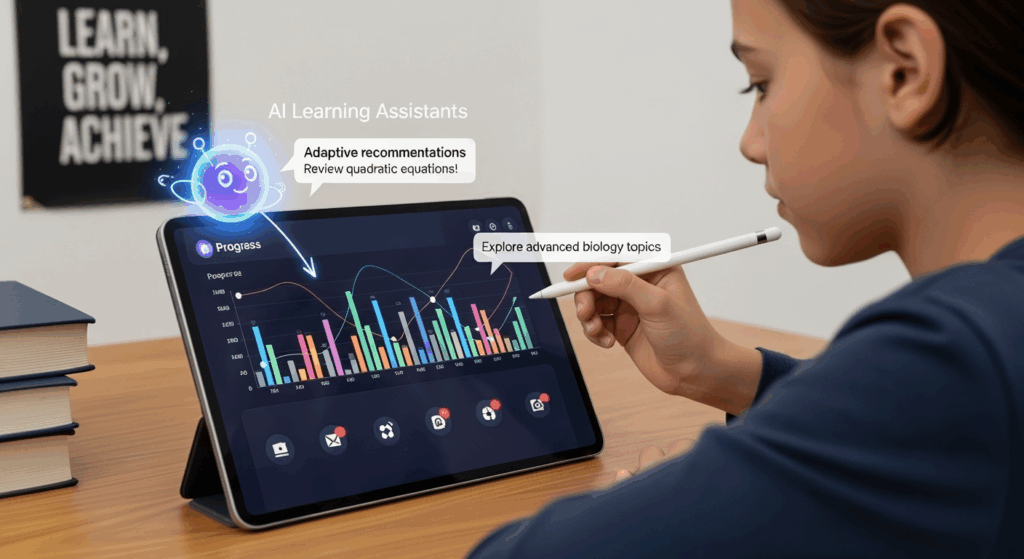
One of the strongest advantages of AI in education is its ability to deliver personalized learning experiences. Unlike traditional classroom models, where all students move at the same pace, AI-powered systems adapt to each learner’s strengths, weaknesses, and speed of learning.
Adaptive Learning Systems
Modern learning platforms leverage AI algorithms to analyze student behavior and tailor lessons accordingly. These adaptive systems can:
- Recommend topics a student should revisit
- Adjust difficulty based on performance
- Provide instant feedback
- Suggest personalized study pathways
This approach ensures high performers remain challenged while struggling learners receive additional support, creating a truly student-centered experience.
Predictive Analytics for At-Risk Students
Predictive analytics is another area where AI in education is transforming outcomes. Many universities worldwide now use predictive tools to identify students at risk of dropping out or failing courses. As highlighted by the World Economic Forum, these insights allow educators to intervene early, offering guidance before challenges become insurmountable.
AI systems can detect patterns such as:
- Declining assignment scores
- Reduced participation in discussions
- Low login activity in digital platforms
- Missed deadlines
By flagging these warning signs, institutions can proactively provide support, improving retention and academic performance across the board.
Improving Student Engagement and Retention

Engagement remains one of the biggest challenges in online and blended learning. AI is changing that through intelligent automation and real-time support tools.
AI Tutors and Chatbots
AI tutors provide students with 24/7 academic assistance, guiding them through difficult concepts, answering course questions, and offering explanations tailored to their preferred learning style. Chatbots, widely adopted in universities globally, have proven to reduce response times and improve overall satisfaction, as reported by Times Higher Education.
EduTech’s Role in AI-Driven Engagement
EduTech Business partners with African universities to integrate AI-driven solutions that support students throughout their academic journey. Using digital counseling tools, automated reminders, and AI-backed learning analytics, EduTech helps institutions monitor progress, identify challenges, and boost student engagement.
Partner schools using EduTech’s AI solutions have reported:
- Better engagement among working professionals
- Higher course completion rates
- Improved onboarding experiences for new students
Through AI in education, institutions are no longer just teaching, they are actively supporting each learner’s success.
Challenges and Ethical Considerations in AI Adoption
Despite its benefits, AI in education comes with challenges that institutions must navigate carefully.
Data Privacy and Security
AI tools rely on large volumes of student data. Without proper security measures, this data can become vulnerable. The UNESCO AI and Education Report emphasizes the need for clear policies around:
- Data protection
- Secure storage
- User consent
- Transparency in how data is used
Algorithmic Bias
AI systems trained on biased datasets may produce unfair outcomes, affecting grading, recommendations, or predictive analytics. Universities must ensure that their AI tools use diverse and representative data to promote fairness.
Human Oversight
AI should complement and not replace human educators. Teachers remain critical in interpreting data, providing emotional support, and ensuring fairness. Ethical AI requires collaboration between humans and machines to maintain integrity in education.
EduTech works closely with partner universities to implement AI responsibly, ensuring policies protect student rights while fostering innovation.
What’s Next for AI in Education?

The future of AI in education is expansive and full of possibility. From intelligent assessments to immersive virtual classrooms, AI is redefining how students learn and how institutions operate.
Smarter Learning Platforms
AI-driven Learning Management Systems (LMS) will continue to offer deeper insights, automate administrative tasks, and provide educators with predictive dashboards to guide interventions.
More Personalized Academic Pathways
Students will soon have the ability to design customized academic journeys based on skills, career goals, and learning behaviors guided by AI recommendations.
AI-Powered Virtual Classrooms
Virtual classrooms with AI moderators, highlighted by trends on eLearning Industry, are becoming more common. These platforms offer real-time support, collaborative learning, and intelligent feedback mechanisms.
Expansion Across Nigeria and Africa
Nigerian universities are already adopting blended learning models. With EduTech’s support, more institutions are integrating AI into admissions, teaching, assessment, and student support. EduTech’s solutions help build future-ready academic environments while maintaining affordability and accessibility for learners across the continent.
Why AI in Education Matters for Global Student Outcomes
AI in education is not just about automation, it’s about improving outcomes. Research shows that institutions leveraging AI enjoy:
- Higher student retention rates
- Increased engagement and motivation
- More equitable learning opportunities
According to a World Economic Forum report, AI tools are essential for scaling quality education in a way that reaches every learner, especially in regions with limited educational resources.
Internal Resources & Further Reading
For those eager to dive deeper into how digital transformation is reshaping education in Nigeria and across Africa, EduTech Business offers a range of insightful resources. Explore our detailed analysis in The Future of Higher Education in Africa: Going Digital, where we examine how technology, AI, and blended learning are expanding access and improving outcomes for students at every level.
If you’re a student navigating the challenges of online learning, our guide How to Stay Motivated During Your Online Degree Program provides practical tips, strategies, and real-life examples to help you maintain focus, balance work and study, and achieve your academic goals.
To learn more about how EduTech Business supports institutions and students in embracing the digital education revolution, visit the EduTech Business Homepage or get in touch with our team through the Contact Page to discover solutions tailored for your needs.
By integrating AI responsibly, universities globally and in Nigeria can enhance student success, reduce dropout rates, and provide personalized learning experiences at scale. EduTech Business continues to partner with institutions to ensure AI is not just implemented but implemented ethically, effectively, and in a way that transforms global student outcomes.
Written by Adebambo Fisher
Intern, Branding, Marketing & Communications